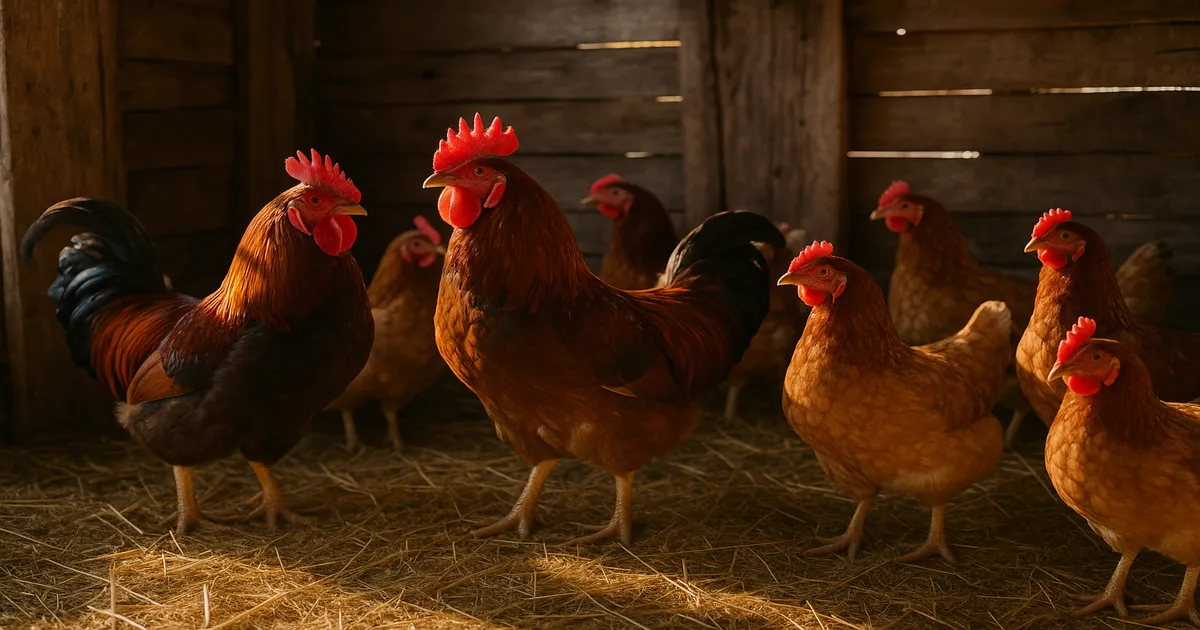
Quick Answer: If you bought straight-run chicks, statistically about half are roosters. Even hatchery-sexed pullets carry a 5–10% error rate. Most breeds can be reliably sexed by 8–12 weeks using a combination of physical features and behavior — though some breeds like Silkies may keep you guessing until 4–6 months.
Figuring out how many of these are roosters is one of the most common questions in backyard chicken keeping — and one of the most stressful, especially if you live somewhere roosters aren’t allowed. The good news is that with the right information, you can make a confident call on most birds by 8–12 weeks. The trick is knowing what to look for and when.
How Many of These Are Roosters? Start With the Numbers
The 50% Rule for Straight-Run Chicks
Straight-run means unsexed — the hatchery ships whatever hatched, no sorting. Biologically, that’s roughly 50% males. Order 10 straight-run chicks and plan for around 5 roosters. It won’t always land exactly on half, but it’s the right number to budget for.
Even if you ordered sexed pullets, don’t assume you’re in the clear. Professional vent sexing — the method most hatcheries use — carries a 5–10% error rate. In a flock of 20 “pullets,” that could mean one or two surprise roosters.
At What Age Can You Reliably Tell?
For most single-comb production breeds, meaningful differences start showing around 4–6 weeks. By 8–12 weeks, you can make a confident call on the majority of birds. Rose-comb and pea-comb breeds — think Wyandottes and Ameraucanas — take longer, closer to 10–14 weeks. Silkies are the outliers: many experienced keepers can’t reliably sex them until 4–6 months.
The key is reading multiple signals together. No single feature is foolproof, but when comb size, feather shape, posture, and behavior all point the same direction, you can be confident.
Physical Signs a Chicken Is a Rooster (By Age)
Weeks 1–3: Early Clues That Are Easy to Miss
Most people can’t reliably sex chicks at this stage — and that’s okay. Some keepers notice that male chicks stand a little taller and seem slightly bolder, but these are soft clues at best. Certain game breeds like Old English Game may already show early dominance behavior by week 3, but for most breeds, you’re still waiting.
Weeks 4–8: Comb, Wattles, and Leg Thickness
This is when things start getting interesting. Rooster combs grow faster and redden earlier than hen combs. Wattles — the fleshy lobes under the chin — also develop more quickly in males. A chick whose comb is noticeably larger and pinker than its flockmates at 5 weeks is worth flagging.
Leg thickness is another useful clue. Run your thumb and forefinger around the shanks of a few birds. Even at this age, rooster legs feel noticeably thicker and heavier than hen legs.
Weeks 8–16: Saddle Feathers, Hackles, and Sickle Tails
This is the most diagnostic window for most breeds. Three feather types to watch for:
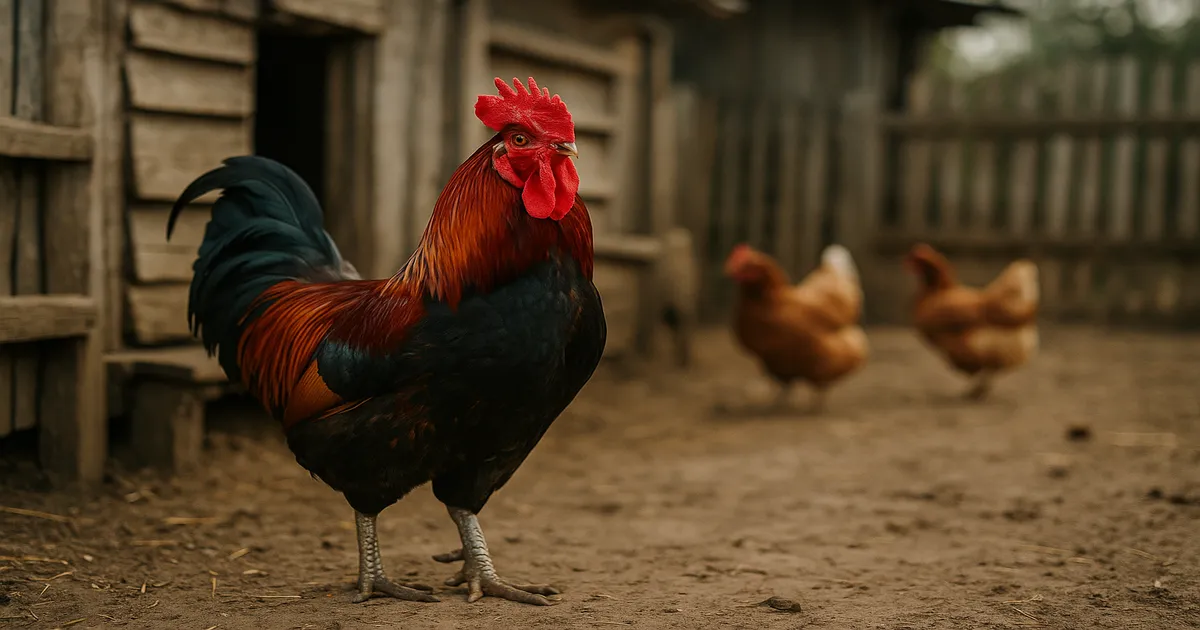
- Saddle feathers — on the lower back just before the tail. Rooster saddle feathers are long, pointed, and shiny. Hen feathers are rounded and matte.
- Hackle feathers — around the neck. Pointed and iridescent in roosters; rounded and uniform in hens.
- Sickle tail feathers — the long, arching feathers that curve upward from the tail. Only roosters grow these.
Spur buds also become visible by 8–10 weeks on males. Hens may have tiny nubs, but rooster spur buds are more prominent and keep growing.
16 Weeks and Beyond: Crowing, Spurs, and Confirmed Behavior
By this point, most roosters have outed themselves. If a bird is crowing — even badly, even at 4 a.m. — it’s a rooster. Spurs are developing. Body size is noticeably larger than the hens. The upright, chest-forward posture becomes unmistakable once you’ve seen it a few times.
Here’s the full comparison at a glance:
| Feature | Rooster | Hen |
|---|---|---|
| Comb | Larger, redder, develops earlier | Smaller, paler, slower |
| Wattles | Larger, longer, redder | Smaller, shorter |
| Saddle feathers | Long, pointed, shiny | Rounded, matte |
| Hackle feathers | Long, pointed, iridescent | Rounded, uniform |
| Tail feathers | Long sickle feathers, arched | Short, rounded, no sickles |
| Leg thickness | Noticeably thicker shanks | Slimmer shanks |
| Spurs | Visible buds by 8–10 weeks | Absent or tiny nubs |
| Body size | 20–30% larger than hens | Smaller, more compact |
| Posture | Upright, chest forward | More horizontal, relaxed |
Rooster Sexing Methods: Which One Should You Use?
Vent Sexing: Most Accurate for Day-Old Chicks
Vent sexing involves gently everting the cloaca to identify the rudimentary male copulatory organ. It’s the standard method at commercial hatcheries and achieves 95–98% accuracy in trained hands. The operative phrase is trained hands — this is not a DIY method. Done incorrectly, it can injure or kill chicks.
Feather Sexing: Works at 1–3 Days in Specially Bred Strains
In certain purpose-bred strains, females feather faster than males. At 1–3 days old, you can compare primary wing feathers: females show longer feathers than the coverts; males show equal or shorter feathers. This only works in breeds specifically developed for feather sexing — it doesn’t apply to most backyard breeds.
Color Sexing: Sex-Links and Autosexing Breeds
This is the most practical option for backyard keepers who want certainty at day one. Sex-linked breeds like Red Sex-Link, Black Sex-Link, and Golden Comet hatch in different colors by sex — nearly 100% accurate. Autosexing breeds like the Cream Legbar and Bielefelder also show color differences at hatch. If you want to skip the guessing game entirely, these are your breeds.
Visual Sexing: The DIY Method
This is what most backyard keepers do — watch and wait, using the physical and behavioral cues above. It’s free, requires no training, and works well for most breeds by 8–12 weeks. The only real limitation is time, and breed difficulty.
DNA Testing: The Gold Standard for Difficult Breeds
If you have a Silkie you genuinely can’t sex at 4 months, DNA testing is the answer. You submit a feather sample or blood spot to a poultry genetics lab and get results back within a week or two. It typically costs $15–25 per bird, but the result is definitive. If you’re in an area with rooster restrictions and you’re not sure about a bird, it’s worth every penny. A feather collection kit makes the process straightforward at home. (Zoologix Avian Sex Determination Test)
How Many of These Are Roosters? A Breed-by-Breed Guide
Easy to Sex Early: Single-Comb Production Breeds
Rhode Island Reds, Leghorns, and Plymouth Rocks show clear comb differences by 4–6 weeks. These are the easiest breeds to sex visually, and by 8 weeks you should have a confident answer on virtually every bird.
Moderate Difficulty: Dual-Purpose and Heritage Breeds
Australorps, New Hampshire Reds, and Sussex fall in the middle. Comb development is visible but slower. Plan for a reliable answer by 10–12 weeks.
Harder to Sex: Rose-Comb, Pea-Comb, and Feather-Footed Breeds
Wyandottes, Dominiques, Ameraucanas, and Brahmas are significantly harder to sex by comb alone — their comb type doesn’t show the dramatic size difference that single-comb breeds do. Focus on feather shape and body size instead. Expect reliable answers at 10–14 weeks.
Notoriously Difficult: Silkies, Cochins, and Marans
Silkies are in a category of their own. Their crest feathers, pea comb, and heavily feathered feet obscure nearly every visual cue. Many experienced keepers still get it wrong at 3 months. Cochins and Marans are also slow to show secondary sex characteristics due to heavy feathering. For these breeds, plan on waiting until 4–6 months — or DNA test.
| Breed | Sexing Difficulty | Reliable By |
|---|---|---|
| Leghorn, Rhode Island Red, Plymouth Rock | Easy | 6–8 weeks |
| Australorp, New Hampshire Red, Sussex | Moderate | 10–12 weeks |
| Wyandotte, Ameraucana, Brahma | Harder | 10–14 weeks |
| Silkie, Cochin, Marans | Difficult | 4–6 months |
Rooster Behavior: What to Watch For
Crowing: When It Starts
Young roosters can begin attempting to crow as early as 4–6 weeks. Early crows are raspy and broken — nothing like the confident call of a mature bird. But even a terrible crow is still a crow. If a bird is making that sound, it’s male.
Mounting, Chest-Bumping, and Dominance
Before they crow, young cockerels often chest-bump each other, puff up, and practice mounting flockmates. These behaviors can appear as early as 3–5 weeks in assertive breeds. If one chick is consistently the instigator, pay attention.
Sentinel Behavior
Mature roosters scan the sky, sound alarm calls, and position themselves between the flock and potential threats. If one bird consistently does this while the others go about their business, that’s a useful behavioral clue — and one that doesn’t show up until later in development.
Hen Behaviors That Mimic Roosters
This trips up a lot of beginners. Assertive hens — especially Rhode Island Reds and New Hampshire Reds — may mount other hens, develop larger-than-average combs, or occasionally produce a crow-like sound. It’s normal dominant-hen behavior, not a sign the bird is male.
Broody hens also confuse people. A hen sitting tight on a nest, puffed up and growling, can look unusual enough that beginners wonder if something is wrong. Broodiness is hen-only behavior; roosters never go broody.
What to Do Once You’ve Identified Your Roosters
Check Local Ordinances First
Many urban and suburban municipalities prohibit roosters entirely due to noise. Check your local zoning laws before you get attached to that cockerel.
Rooster-to-Hen Ratios
One rooster can effectively fertilize 10–12 hens. More importantly, keeping that ratio prevents over-mating stress. Too many roosters means constant mounting, feather loss on hens’ backs, and fighting between males. If you have more roosters than you need, rehoming or processing them is the kindest option for the whole flock.
Space Requirements When Roosters Are Present
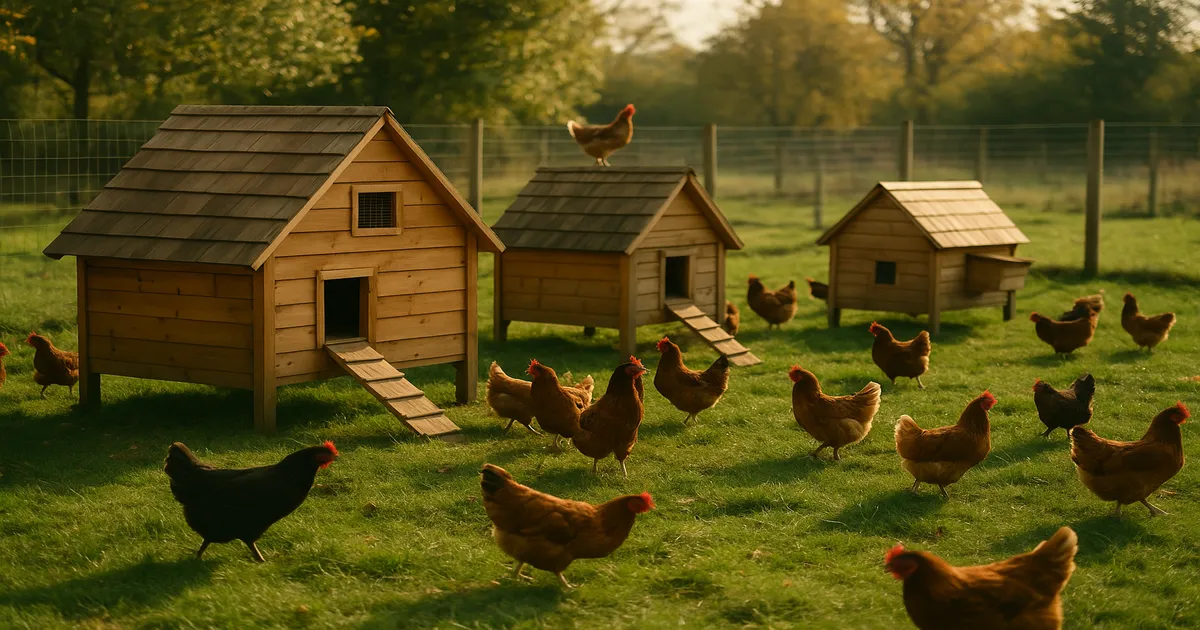
Standard minimums are 4 sq ft per bird inside the coop and 10 sq ft per bird in the run. When roosters are present, push run space to 15–20 sq ft per bird to reduce hen harassment. Multiple roosters really need free-range access — at least an acre — to coexist peacefully. A well-designed walk-in coop gives you the flexibility to partition space if tensions rise.
Feeding Roosters Alongside Hens
Layer feed contains 3.5–4.5% calcium, which hens need for eggshell production. For roosters, that calcium level can damage the kidneys over time. If you’re keeping roosters long-term, switch the whole flock to an all-flock or flock raiser feed (16–18% protein, ~1% calcium) and offer oyster shell free-choice in a separate feeder for the hens. They’ll self-regulate their calcium intake; roosters will largely ignore the oyster shell. A dedicated small hanging feeder keeps the oyster shell accessible without roosters dominating it.
Health Checks Before You Conclude It’s a Rooster
A sick hen can look a lot like a rooster to an inexperienced eye — upright posture, lethargy, reduced laying, or changes in comb color. Before you label a bird male, rule out illness. Is it eating and drinking normally? Are droppings normal? Is it keeping up with the flock?
A pale or discolored comb doesn’t mean rooster — it can signal coccidiosis, external parasites like mites or lice causing blood loss, or other illness. Marek’s disease can cause leg weakness and wing drooping that dramatically changes a bird’s posture and appearance.
If a bird looks “off” in ways that go beyond feather shape and comb size — lameness, labored breathing, significant weight loss, neurological symptoms — see a vet before drawing any conclusions about sex.
Frequently Asked Questions
How early can you tell if a chick is a rooster?
With sex-linked breeds, you can tell at hatch by color. For most other breeds, meaningful physical differences start appearing around 4–6 weeks. A confident visual assessment is usually possible by 8–12 weeks for single-comb breeds, and later for rose-comb, pea-comb, and heavily feathered breeds.
What percentage of straight-run chicks are roosters?
About 50%. Any given batch might run 40–60% male, but 50% is the right number to plan around. Even hatchery-sexed pullets carry a 5–10% error rate, so don’t assume you’re guaranteed all hens.
Can a hen crow or act like a rooster?
Yes, occasionally. Dominant hens — particularly Rhode Island Reds and New Hampshire Reds — may mount other hens, develop a larger comb than average, and rarely produce a crow-like sound. This is normal assertive hen behavior, not a sign the bird is male. True broodiness is also hen-only and sometimes confuses beginners.
How do you tell a rooster from a hen in adult birds?
In adults, the signs are hard to miss: roosters crow, carry long pointed saddle and hackle feathers, sport arching sickle tail feathers, and stand with an upright chest-forward posture. Body size is typically 20–30% larger than hens of the same breed. The simplest test for a mature bird — does it lay eggs? Roosters never do.
What should I do if I have too many roosters?
First, check local ordinances — you may be required to rehome or process them regardless. If you can keep some, aim for no more than one rooster per 10–12 hens. Extra roosters can be rehomed through local farm groups, feed store bulletin boards, or poultry swap meets. Processing for the table is also a practical and humane option many backyard keepers choose. Keeping too many roosters together without adequate space causes fighting, feather damage, and serious stress on your hens.