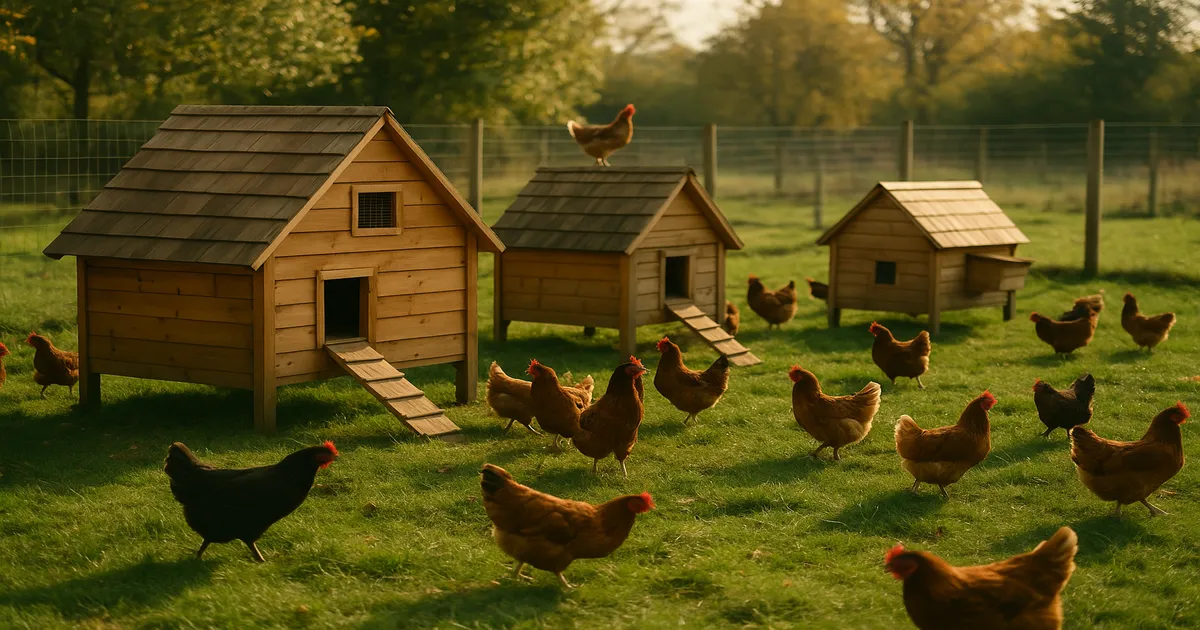
Quick Answer: Most suburban backyards can comfortably support 3–10 hens, based on the standard minimums of 4 sq ft of indoor coop space and 10 sq ft of outdoor run per bird. Local ordinances, breed size, and how you manage your flock all shift that number up or down. Check your zoning laws first — then do the math.
Figuring out how many hens in a backyard setting actually makes sense is the first real question every new chicken keeper faces — and it’s more layered than it looks. Space, local laws, breed choice, and your management style all pull the number in different directions. This guide walks you through every factor so you can land on a flock size that works for your yard, your family, and your birds.
How Many Hens Fit in a Backyard? Start Here
The 30-Second Rule of Thumb
Start with two numbers: 4 sq ft of indoor coop space and 10 sq ft of outdoor run space per standard-sized hen. These are the widely accepted minimums. For better bird welfare and fewer behavioral problems like feather-pecking, aim for 6–8 sq ft indoors and 15–20 sq ft in the run.
Use this table as your starting point:
| Usable Yard Space | Recommended Flock Size | Notes |
|---|---|---|
| Under 500 sq ft | 3–4 hens | Compact setup; supplement feed |
| 500–1,000 sq ft | 4–6 hens | Standard suburban flock |
| 1,000–2,500 sq ft | 6–12 hens | Good foraging opportunity |
| 2,500–5,000 sq ft | 12–20 hens | Semi-free-range possible |
| 5,000+ sq ft | 20+ hens | True free-range management |
Why Flock Size Is Never One-Size-Fits-All
A 1,000 sq ft backyard in a city with a 4-hen ordinance cap is a very different situation from the same yard in a rural township with no restrictions. Bantam breeds like Silkies need only 2–3 sq ft indoors, so you can fit more birds in the same footprint. Your management style matters too — a free-ranging flock needs far less supplemental run space than a fully confined one.
Check Local Laws Before You Count Your Chickens
Typical Municipal Flock Caps and Rooster Bans
Many municipalities cap backyard flocks at 4–6 hens and ban roosters outright. Some cities allow chickens only on lots above a minimum square footage. Violating these rules can mean fines, forced rehoming of your birds, or both. Do this research before you buy a single chick.
How to Find Your Local Zoning Rules
- Search “[your city/county name] municipal code chickens” or “backyard poultry ordinance”
- Call your city or county zoning office directly — online codes aren’t always current
- Check your state’s department of agriculture website for statewide rules
- Verify with a second source; zoning codes change more often than you’d expect
HOA Restrictions and Neighbor Relations
If you live in an HOA community, the CC&Rs may prohibit chickens even where local zoning allows them — and HOA rules win. Pull your HOA documents or email the board before any purchase. Even where chickens are perfectly legal, a quick conversation with neighbors (and a regular gift of fresh eggs) goes a long way toward keeping the peace.
Space Calculations: Coop, Run, and Free-Range Requirements
Indoor Coop Space: Minimum vs. Recommended
The minimum is 4 sq ft per standard hen inside the coop; the recommended range is 6–8 sq ft for a calmer, healthier flock. Cramped coops lead to pecking, stress, and faster disease spread. Bantam breeds like Silkies can get by with 2–3 sq ft, which is one reason they’re popular in smaller yards.
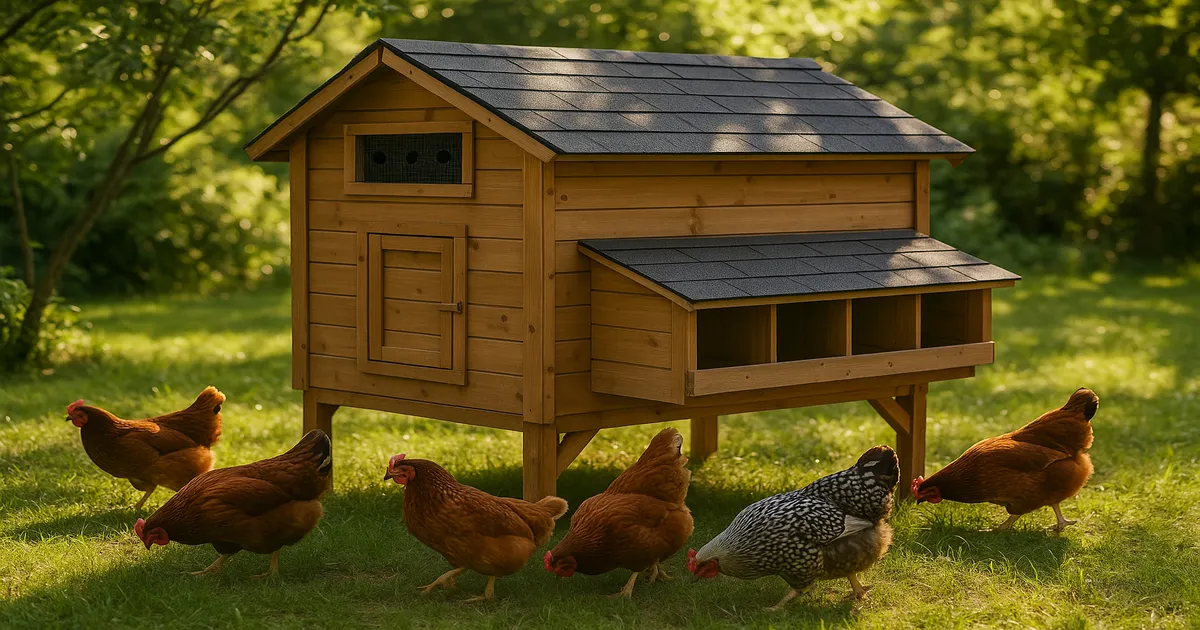
A well-built prefab coop can work for small flocks, but check the manufacturer’s stated capacity skeptically — most overstate how many birds fit comfortably. (Omlet Eglu Cube)
Outdoor Run Space Per Hen
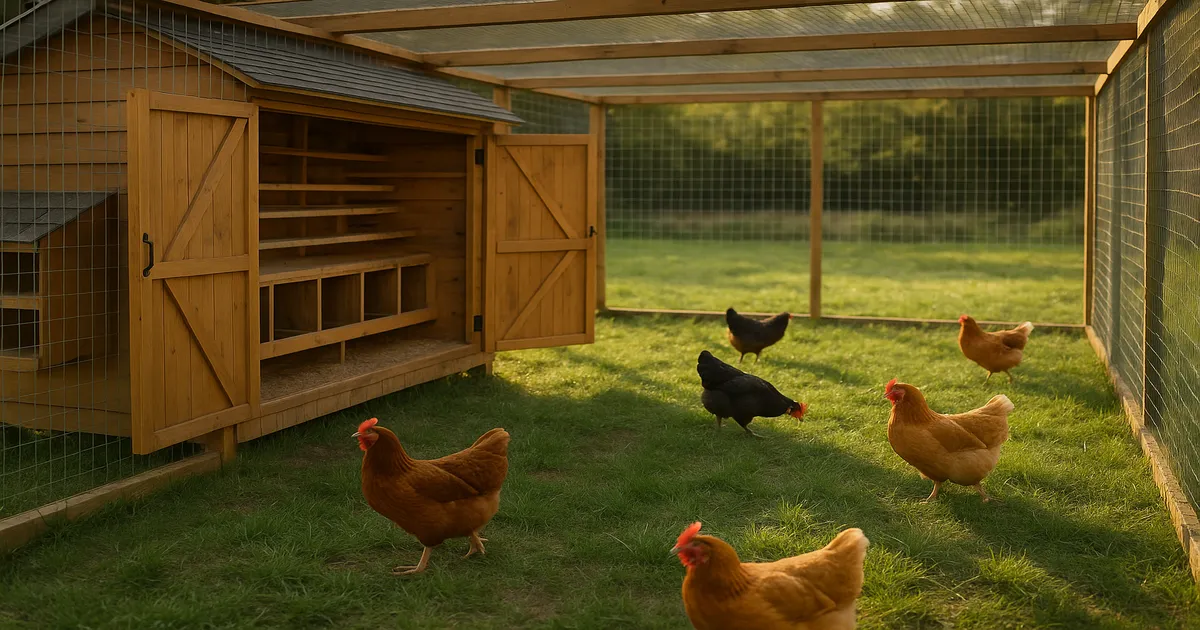
A covered, predator-proof run needs at least 10 sq ft per hen, but 15–20 sq ft is noticeably better. For genuine free-ranging — where hens actually forage and supplement their own diet — plan on 250+ sq ft per bird. Below that threshold, hens strip vegetation quickly and the foraging benefit largely disappears.
Free-Range vs. Confined Flock Management
Confined flocks are easier to protect from predators and require more structured feeding. Free-ranging birds self-supplement with insects and greens, reducing feed consumption by 20–30% during peak foraging season, but they need more space and solid perimeter security. Most suburban keepers land somewhere in between — a secure run for daily use, with supervised free-range time when someone’s home.
An automatic coop door makes that routine much easier, opening at dawn and closing at dusk without you having to be there.
Roost Bars, Nesting Boxes, and Ventilation
Allow 8–12 inches of linear roost space per bird, using 2×4 lumber laid flat side up. The flat surface lets hens cover their toes while sleeping — important for frostbite prevention in winter. Position the highest roost 12–18 inches below the ceiling for adequate ventilation clearance.
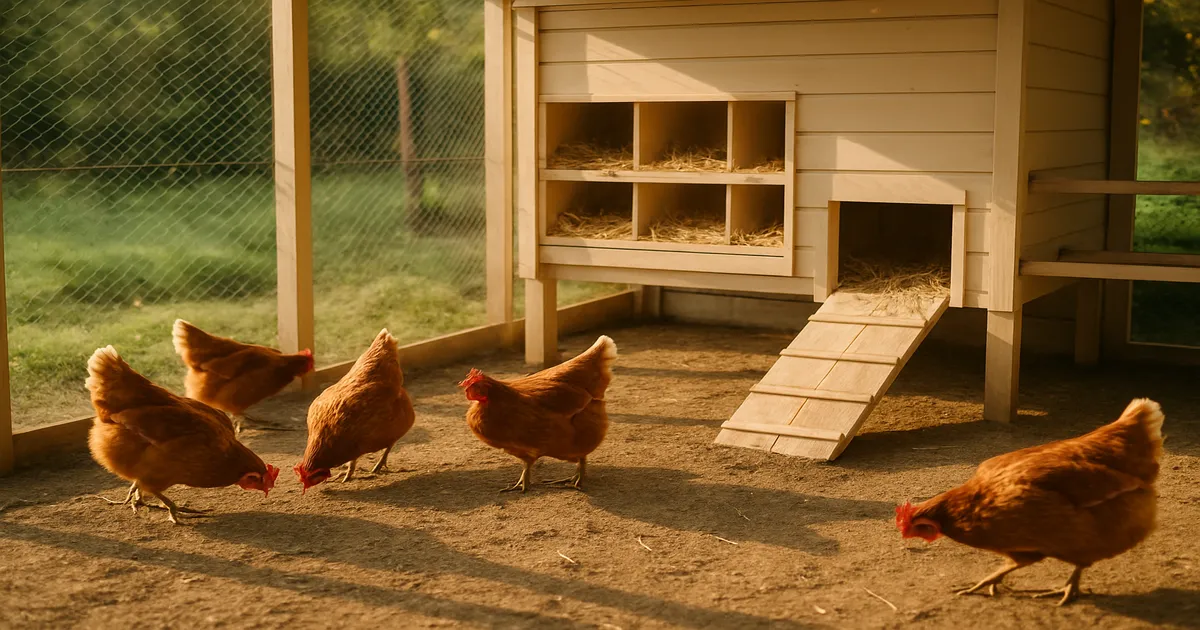
For nesting boxes, the ratio is 1 box per 4–5 hens, with a minimum interior size of 12×12×12 inches. A flock of 6 hens needs just 2 boxes. Fair warning: hens will often all prefer the same box anyway, so don’t overbuild.
Ventilation is non-negotiable. Provide at least 1 sq ft of ventilation per 10 sq ft of floor space, positioned high on the walls near the roofline so moisture and ammonia escape without creating drafts at bird level. If you can smell ammonia when you walk in, ventilation is insufficient — and that level of exposure damages your hens’ respiratory systems.
Predator-Proofing Essentials
- Extend a hardware cloth apron 12–18 inches outward from the run perimeter (or bury it 6–12 inches underground) to stop diggers
- Use two-step latches on all doors — raccoons can defeat single-step mechanisms
- Seal any gap larger than ½ inch — weasels are smaller than you think
- Cover the run roof completely with hardware cloth or metal roofing
Choosing the Right Breeds for Your Backyard Flock
Breed Comparison at a Glance
| Breed | Eggs/Year | Egg Color | Weight (Hen) | Temperament | Cold Hardy | Heat Hardy |
|---|---|---|---|---|---|---|
| Rhode Island Red | 250–300 | Brown | 6.5 lbs | Assertive | Good | Good |
| Buff Orpington | 175–200 | Light brown | 8 lbs | Very gentle | Excellent | Moderate |
| Barred Rock | 200–280 | Brown | 7.5 lbs | Calm | Excellent | Good |
| Easter Egger | 200–250 | Blue/green/pink | 4–5 lbs | Friendly | Good | Good |
| White Leghorn | 280–320 | White | 4.5 lbs | Active/Independent | Moderate | Excellent |
| Silkie | 80–120 | Cream/tinted | 2–3 lbs | Very gentle | Moderate | Moderate |
The Reliable Producers: Rhode Island Red and Barred Rock
Rhode Island Reds deliver dependable brown eggs — 5–6 per week, year after year. They’re confident birds, sometimes to a fault. In a mixed flock, they can bully smaller or gentler breeds, so pair them thoughtfully. Barred Rocks hit a similar sweet spot: good production (4–5 eggs per week), an easygoing temperament, and excellent cold hardiness. They tend to warm up to their keepers quickly, making them a strong all-around choice for beginners.
Family-Friendly Picks: Buff Orpington and Easter Egger
Big, fluffy, and famously calm, Buff Orpingtons are the breed families with young children reach for first. They’re cold-hardy, tolerate confinement well, and rarely cause trouble in a mixed flock. The trade-off is moderate egg production (3–4 eggs per week) and a tendency toward broodiness. Easter Eggers lay blue, green, or pink eggs, which makes egg collection genuinely exciting. Production is solid at 4–5 per week, and their friendly, curious nature makes them easy to manage. Because they’re lighter birds (4–5 lbs), they’re a good fit for smaller yards.
Maximum Output: White Leghorn
If egg production is the priority, nothing beats a White Leghorn — up to 6–7 eggs per week and as many as 320 per year. They’re lightweight, heat-tolerant, and efficient feed converters. They’re also active and independent, so they’re not the best choice if you want birds that enjoy being handled.
The Bantam Option: Silkie
Silkies are in a category of their own. Exceptionally gentle and famously broody, they’re great for hatching eggs naturally and small enough that children can handle them easily. At 2–3 lbs, they need only 2–3 sq ft of indoor space. Egg production is low — roughly 2–3 per week — so they’re not an egg-first choice. Note that Silkie egg color is typically cream to lightly tinted, not pure white.
Mixing Breeds: What to Watch For
Mixed flocks work well when breeds are similarly sized and similarly tempered. Assertive breeds like Rhode Island Reds can dominate gentler birds, especially at the feeder. If you mix bantams with standard-sized birds, give bantams extra hiding spots and make sure feeders and waterers are accessible at their height.
Egg Production: What to Realistically Expect
When Do Pullets Start Laying?
- Early layers (18–20 weeks): Leghorns, Rhode Island Reds, Sex-Links
- Mid-range (20–24 weeks): Barred Rocks, Easter Eggers
- Late layers (24–28+ weeks): Buff Orpingtons, Silkies
Pullets hatched in spring typically start laying by late summer. Pullets hatched in fall may delay their first egg until the following spring because of decreasing daylight — something worth factoring into your flock start date.
Seasonal Drops, Molt, and Winter Lighting
Without supplemental lighting, expect production to drop 50–80% from October through February. The fix is straightforward: a low-wattage LED bulb on a timer (Hatortempt Daylight Chicken Coop Light) set to maintain 16 hours of light per day. Add morning hours rather than evening hours — hens need a consistent dark period to rest.
Molt hits in fall and pauses laying entirely for 6–12 weeks. Switch to a higher-protein feed (20–22%) during this period to speed feather regrowth and get hens back into production faster.
Broodiness and Year-by-Year Decline
A broody hen stops laying completely — sometimes for weeks at a stretch. Highly broody breeds like Silkies and Buff Orpingtons may go broody multiple times a season. To break broodiness, place the hen in a wire-bottomed “broody breaker” cage with food and water but no nesting material for 3–7 days. Most hens resume laying within 1–2 weeks.
Hens produce at peak levels during years one and two, then decline roughly 10–15% per year after that. A 4-year-old hen who once laid 280 eggs a year may be down to 180 or fewer. Plan for flock rotation — adding new pullets every 2–3 years — if consistent egg supply matters to you.
Feeding Your Backyard Hens
Feed Types by Life Stage
| Life Stage | Feed Type | Protein % | Age Range |
|---|---|---|---|
| Chicks | Chick Starter | 18–22% | 0–8 weeks |
| Pullets | Grower/Developer | 15–18% | 8–18 weeks |
| Laying Hens | Layer Feed | 15–18% | 18+ weeks |
| Molting Hens | Flock Raiser or High-Protein | 20–22% | During molt |
A standard laying hen eats about ¼ lb (113 g) — roughly ½ cup of layer feed per day. Bantams need about half that. Free-ranging hens typically eat 20–30% less grain during peak foraging season, but always keep feeders stocked as a baseline.
Calcium, Oyster Shell, and Grit
Offer crushed oyster shell free-choice in a separate container — never mixed into feed. Hens self-regulate, taking what they need for strong eggshells. Don’t offer oyster shell to chicks or pullets under 18 weeks; excess calcium can stress their developing kidneys.
Confined hens also need insoluble granite grit free-choice to grind feed in their gizzard. Free-ranging hens usually find enough on their own.
Safe Treats and Foods to Avoid
Keep treats to 10% or less of the daily diet — more than that dilutes protein and calcium intake. Safe options include leafy greens, watermelon, berries, mealworms, and cooked eggs.
Never feed:
- Avocado (persin toxin — rapidly fatal)
- Raw or dried beans (phytohaemagglutinin toxin)
- Chocolate (theobromine toxicity)
- Onions in large quantities (hemolytic anemia)
- Moldy food of any kind
- Salty processed foods
Water Requirements
Each hen drinks ½ to 1 pint (240–480 ml) of water daily — that doubles above 90°F (32°C). Plan on 1 gallon per 4–5 hens as a daily minimum, and clean waterers every day. Biofilm builds up fast, especially in warm weather.
In winter, a heated waterer base prevents freezing and saves you multiple daily trips to the coop. Check it twice daily in extreme cold regardless.
Keeping Your Flock Healthy
Marek’s Disease: Vaccinate Before You Buy
Marek’s is a highly contagious herpesvirus that causes leg and wing paralysis, blindness, and tumors, primarily in birds 2–30 weeks old. There is no cure. The only protection is vaccination at day one of life — something reputable hatcheries do as standard practice. Always source chicks from NPIP-certified hatcheries and confirm that Marek’s vaccination was administered.
Coccidiosis: Recognizing and Treating It
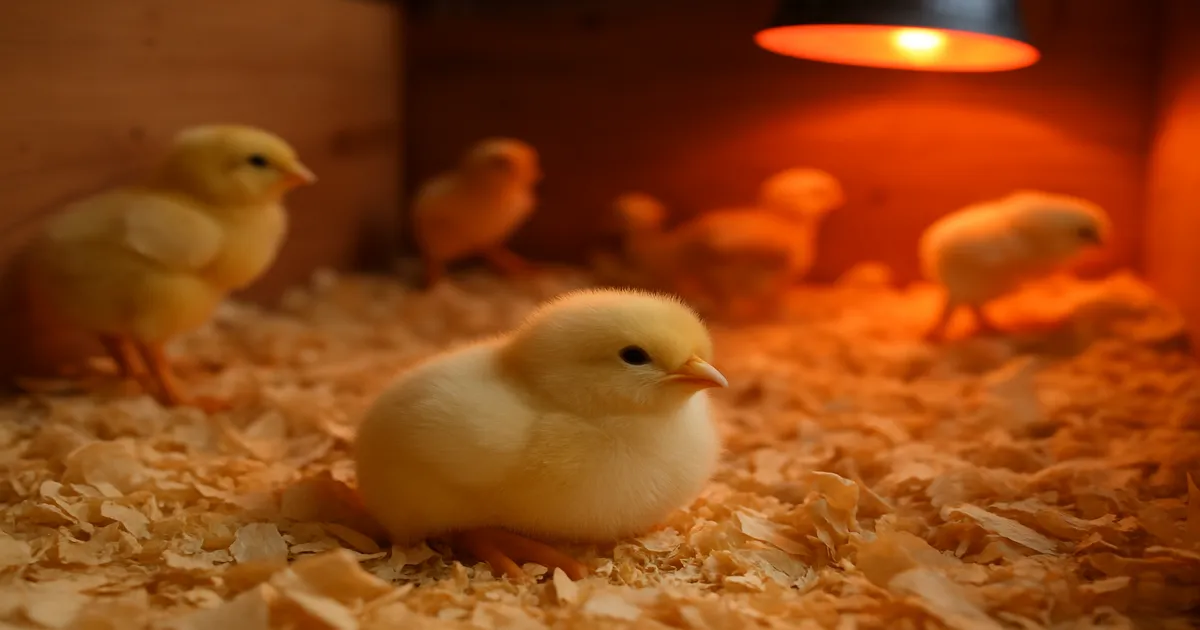
Coccidiosis is caused by Eimeria protozoa and hits hardest in chicks 3–6 weeks old. Bloody or watery diarrhea, lethargy, and a hunched posture are the key signs. Treat with Amprolium (Corid) in drinking water — 1.5 tsp per gallon for 5–7 days for severe cases, following label directions for mild cases. Medicated chick starter contains a low-level amprolium dose as prevention. Keep brooders dry and avoid overcrowding.
Mites and Lice
Check for external parasites by parting feathers under the wings and around the vent. Northern Fowl Mites live on the bird year-round; Red Poultry Mites hide in coop cracks during the day and feed on birds at night — you’ll find them in the coop rather than on the birds themselves. Treatment options include permethrin-based sprays for the coop and birds. Always ensure hens have access to a dedicated dust bath area — it’s their primary self-grooming tool and helps keep parasite loads down.
Biosecurity Basics
- Quarantine all new birds for 30 days before introducing them to your flock
- Source chicks from NPIP-certified hatcheries only
- Limit visitor access to your coop and run
- Clean footwear before and after entering the chicken area
- Never share equipment with other flock owners without disinfecting first
If you see neurological symptoms, sudden unexplained deaths, respiratory distress, or bloody droppings that don’t respond to treatment within 48 hours, call a poultry veterinarian. Many general practice vets don’t treat chickens — search for an avian vet or contact your state’s agricultural extension office for a referral.
Seasonal Care
Summer: Preventing Heat Stress
Heat stress sets in above 95°F (35°C) and can be fatal. Provide deep shade, maximize coop ventilation, and refresh waterers with cool water at least twice daily in hot weather. Frozen treats — watermelon chunks, frozen corn — help birds cool down and encourage hydration. Avoid handling birds during the hottest part of the day.
Winter: What Hardy Breeds Can Handle
Hardy breeds like Barred Rocks, Buff Orpingtons, and Wyandottes tolerate temperatures as low as -20°F (-29°C) — provided the coop is dry and draft-free. Cold itself is rarely the problem; moisture and ammonia are. Skip the heat lamp if at all possible. They are a significant fire risk in a coop full of dry bedding and are responsible for a disproportionate number of coop fires each year.
Frequently Asked Questions
How many hens in a backyard do I need for a family of four? Most families of four are well served by 4–6 hens. At peak production, that’s roughly 24–36 eggs per week — more than enough for daily use, with extras to share or bake with.
Can I keep just one or two hens? Technically yes, but chickens are social animals and a single hen will be stressed without companions. Two is the practical minimum, and three gives you a buffer if one bird dies or goes broody.
Do I need a rooster for my hens to lay eggs? No. Hens lay unfertilized eggs without a rooster present. You only need a rooster if you want fertilized eggs for hatching. Most urban and suburban ordinances ban roosters anyway because of noise.
How do I introduce new hens to an existing flock? Quarantine new birds for 30 days first. Then use a “see but don’t touch” method — house newcomers in a separate pen within sight of the existing flock for 1–2 weeks before allowing full contact. This reduces pecking order stress significantly.
How many hens in a backyard flock is too many? You’ve exceeded your practical limit when birds show signs of stress — feather-pecking, aggression at feeders, or bare patches on the ground in the run. If you’re hitting those signs, either expand the space or reduce the flock. More birds is not always better.