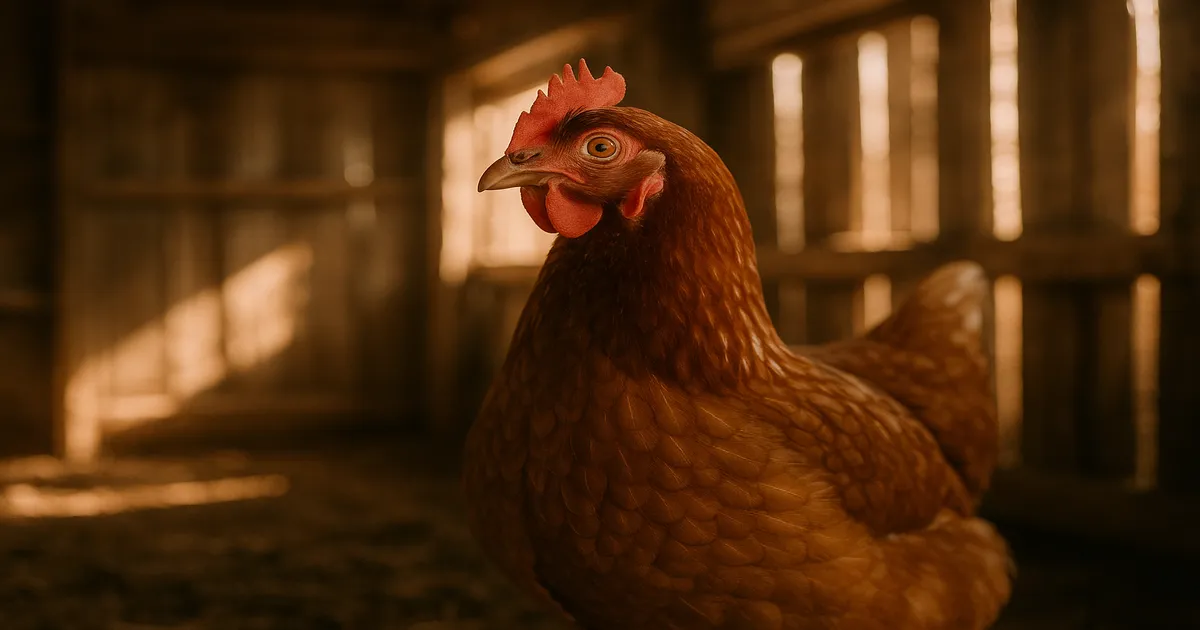
Quick Answer: An impacted crop is a physical blockage where food, grass, or fibrous material gets stuck and won’t pass into the digestive tract. The definitive test is to check your hen’s crop first thing in the morning before she eats — a healthy crop feels flat and soft, while an impacted crop stays hard, firm, or doughy. Mild cases can often be treated at home with crop massage and olive oil, but call a vet if the crop hasn’t improved within 24–36 hours.
If you’re standing in your yard right now asking “does her crop look impacted to you?” — you’re already doing the right thing. Impacted crop is one of the most common health crises in backyard flocks, and catching it early makes all the difference. With a quick hands-on check and some basic knowledge, you can assess the problem and start treatment within minutes.
Does Her Crop Look Impacted? The One-Minute Morning Check
The best time to assess a crop is first thing in the morning, before the bird has had any food or water. A healthy hen empties her crop overnight. Reach under her feathers at the base of the neck, slightly to the right of center, just above the breast. You’re feeling for size, texture, and firmness.
A healthy empty crop feels flat — almost undetectable. A crop that’s still full, hard, or doughy at 7 a.m. is your red flag.
Normal Crop vs. Impacted Crop at a Glance
| Condition | Feel | Smell | Bird Behavior |
|---|---|---|---|
| Normal full crop (evening) | Soft, round, pliable | None | Active, eating normally |
| Normal empty crop (morning) | Flat, barely palpable | None | Hungry, alert |
| Impacted crop | Hard, doughy, or firm | Mild or none | Lethargic, not eating |
| Sour crop (yeast infection) | Soft, squishy, balloon-like | Sour, foul, yeasty | Lethargic, head shaking |
| Pendulous crop | Hangs low, floppy | Variable | Eats but loses weight |
Chicken Crop Anatomy: What You’re Actually Feeling
The crop is a muscular pouch at the base of the neck, sitting slightly right of center, just below where the neck meets the breast. It’s the first major stop in the digestive system after food travels down the esophagus. On a well-fed hen by late afternoon, you can often see it bulging visibly through the feathers.
A full, healthy crop at the end of the day feels like a soft water balloon — pliable, yielding, and a little squishy. No firmness, no resistance, no smell. By morning, that same crop should feel flat and barely noticeable. Getting familiar with how your healthy birds feel is the single best thing you can do to catch problems early.
After the crop, food moves into the proventriculus (the true stomach, where digestive enzymes are added) and then into the gizzard, where insoluble grit grinds everything down. Without grit, fibrous material can’t be processed — and that’s where impaction begins. The crop softens and stores food; it doesn’t grind it.
Impacted Crop vs. Sour Crop vs. Pendulous Crop
Getting the diagnosis right matters because the treatments are different — and using the wrong one can make things worse.
Impacted crop is a physical blockage. Long grass clippings, fibrous weeds, feathers, or a piece of twine tangle together and form a mass that won’t pass through. The crop feels hard, firm, or doughy in the morning, usually with no odor. The hen will be lethargic, fluffed up, and uninterested in food.
Sour crop is a yeast overgrowth — specifically Candida albicans — and it feels completely different. The crop is soft and squishy, almost balloon-like, and doesn’t empty overnight. The defining symptom is a sour, yeasty odor coming from the beak. You may also see the hen shaking her head or repeatedly stretching her neck. Do not use olive oil for sour crop. Oil creates an environment where yeast thrives and will make the infection significantly worse.
Pendulous crop happens when the crop muscle loses tone and stretches out permanently. It hangs visibly lower on the chest than normal, even when mostly empty. The hen may keep eating but gradually loses weight because food moves through so slowly. This is often the long-term result of repeated impaction or chronic overeating.
One more worth knowing: Marek’s disease can cause vagal nerve damage that stops the crop from emptying — not because of a physical blockage, but because the nerve signal is gone. If your hen doesn’t respond to standard impaction treatment, an avian vet should rule this out.
How to Treat an Impacted Crop at Home
Most mild to moderate impactions respond well to conservative home care if you start within the first 12–24 hours.
- Isolate the hen in a quiet, warm space — 70–75°F (21–24°C). Keep her away from the flock so you can monitor her closely.
- Withhold all solid food for 12–24 hours. She needs time for the blockage to soften, not more material going in.
- Give 1 teaspoon of olive oil or coconut oil orally using a dropper. This lubricates the blockage and helps it move. Don’t force large amounts — a teaspoon is enough.
- Massage the crop gently for 5–10 minutes, 3–4 times per day. (See technique below.)
- Recheck after 12 hours. If the crop is softening and shrinking, you’re on the right track. If it’s unchanged or harder, escalate to a vet.
- Reintroduce food slowly — start with small amounts of wet mash (softened pellets or crumble) before returning to dry feed.
- Add a probiotic once the crop is moving again to help restore healthy gut flora. Plain unsweetened yogurt works short-term; a dedicated poultry probiotic is more reliable for sustained recovery.
How to Massage a Chicken’s Crop Safely
Hold your hen securely against your body with her head slightly elevated. Place two fingers on either side of the crop and use gentle, circular kneading motions — think of working a knot out of bread dough, but much lighter. You’re trying to break up the compacted mass and encourage it to move toward the proventriculus.
Never tip the hen head-down and try to “milk” the crop contents out through the beak. Chickens cannot vomit safely — they will aspirate the material into their lungs, which can be fatal.
When to Call a Vet
Seek an avian vet if:
- The crop hasn’t reduced in size after 24–36 hours of home treatment
- The bird cannot stand or walk
- The crop has been hard for 48 hours or more
- You notice respiratory distress or gasping
- The crop has developed a foul odor (possible necrotic tissue or concurrent sour crop)
A vet may perform crop lavage (flushing) or, in severe cases, a surgical crop incision called an ingluviotomy. It sounds drastic, but it’s a routine procedure for an experienced avian vet — and far safer than leaving a severe impaction untreated.
Treating Sour Crop and Pendulous Crop
For sour crop, the gold standard is Nystatin, a prescription antifungal given at 300,000 units per bird, twice daily for 7–10 days. You’ll need a vet to prescribe it, but it’s highly effective. For mild cases or as a preventive measure, raw apple cider vinegar (with the mother) at 1 tablespoon per gallon of water creates an acidic environment that discourages yeast growth. Remove any moldy feed, wet bedding, or standing water immediately — they’re likely the source of the problem.
After antifungal treatment, rebuild crop flora with a Lactobacillus-based probiotic for 2–3 weeks. (Probios Dispersible Powder)
For pendulous crop, there’s no cure — only management. A crop bra (a small fabric support that holds the crop in a more natural, elevated position) can slow further stretching and make eating more comfortable. You can fashion one from a folded bandage or buy one made specifically for chickens. Feed small, frequent meals of wet mash rather than free-choice dry feed to reduce the volume sitting in the crop at any one time. Severe cases may warrant surgical correction by an avian vet.
Feeding, Grit, and Prevention
Grit Is Non-Negotiable
If your chickens eat anything beyond commercial pellets — and free-range birds certainly do — they need insoluble grit. Granite or flint grit is stored in the gizzard and grinds food down. Without it, fibrous material can’t be broken apart, and impaction is just a matter of time. Offer coarse grit free-choice in a separate dish year-round, especially in winter when frozen ground cuts off birds’ natural access to small stones.
The Biggest Dietary Culprit: Long Grass
Long grass clippings are the single leading cause of impacted crop in backyard chickens. When hens eat long, dry, or stringy grass, it tangles into a fibrous mat in the crop that the gizzard simply can’t break down. Never throw lawn clippings into the run. If your birds free-range on an overgrown area, mow it first and let them forage on short grass only. Other high-risk materials include hay, straw consumed in quantity, pine needles, and any stringy plant material.
Safe Treats vs. High-Risk Foods
| Food | Risk Level | Notes |
|---|---|---|
| Long grass clippings | HIGH | Never feed; mow instead |
| Bread or pasta | Moderate | Expands in crop; small amounts only |
| Fibrous raw squash | Low–Moderate | Chop the flesh; seeds are fine |
| Leafy greens | Low | Chop to under 1 inch |
| Scratch grains | Low–Moderate | Fine in small amounts with grit available |
| Dried mealworms | Low | Good protein treat; ~1 tbsp per bird |
| Sunflower seeds | Low | High fat; keep within treat limits |
| Citrus, onion, avocado | Avoid | Toxic or digestive irritants |
Treats should never exceed 10% of the daily diet. A standard laying hen eats roughly ¼ pound (113g) of feed per day — so her treat allowance is a small handful, not a bowlful.
Additional Prevention Tips
Fermenting your regular layer feed for 48–72 hours before serving increases beneficial bacteria, improves digestibility, and supports healthy crop motility. Birds typically eat less of it because it’s more nutrient-dense, which also reduces gorging risk.
Feed ad libitum (free-choice) using a gravity feeder rather than restricting and refilling on a schedule. When feed is restricted and then suddenly available, birds gorge — and that’s a direct impaction risk.
Breeds and Birds at Higher Risk
Silkies, Polish, and Houdans have dense feathering around the neck and chest that makes visual detection of a swollen crop nearly impossible. With these breeds, rely entirely on touch. Make the morning crop check a daily habit.
Bantams — Serama, Dutch Bantam, Silkie Bantam — have proportionally small body reserves. An impaction that a standard hen might tolerate for 48 hours can become critical in a bantam within 24. Treat crop issues in bantams as urgent from the moment you notice them.
Heavy dual-purpose breeds like Rhode Island Reds, Buff Orpingtons, and Plymouth Rocks have large crops that can hold a substantial amount of material before symptoms become obvious. By the time a big hen looks visibly unwell, the impaction may already be severe. Regular morning checks catch problems before they escalate.
Free-ranging birds and hens over 3 years old face elevated risk. Older hens have reduced crop motility regardless of breed, making them statistically more prone to both impacted and sour crop. These birds deserve extra attention during daily checks.
Crop Health and Egg Production
A hen’s body prioritizes survival. When the crop isn’t functioning — whether from impaction or sour crop — the body interprets it as a stress signal and shuts down reproduction within 24–72 hours. Egg production is metabolically expensive, and a sick hen simply can’t sustain it.
Reduced laying is often the first symptom a keeper notices, before they ever think to check the crop. If a hen who normally lays reliably suddenly stops in the middle of summer when daylight is long, don’t assume it’s a molt. Check the crop that same morning.
One important exception: a broody hen eats and drinks minimally — sometimes just once a day — for the full 21+ days she’s sitting on eggs. Her crop will feel nearly flat most of the time, and that’s completely normal. The difference is behavior. A broody is alert, defensive, and firmly in charge of her nest. A sick hen is lethargic, fluffed, and withdrawn.
Coop and Housing Factors
Chickens kept below the minimum of 4 sq ft per bird inside the coop and 10 sq ft per bird in the run get bored and stressed. Bored birds peck at feathers, consume litter, and eat whatever they can find — all impaction risks. Crowded roost bars compound the problem: birds pushed off the roosts sleep on the floor and spend more time in contact with litter. Aim for at least 18 inches of roost bar space per standard bird.
Poor ventilation raises interior humidity above 75%, which promotes mold growth on feed and bedding. Moldy material introduces Candida yeast directly into the crop when hens peck at it. Aim for at least 1 square foot of ventilation per 10 square feet of coop floor space, positioned above the roost line to avoid drafts. Remove uneaten wet feed within 4 hours — it ferments rapidly and is a direct sour crop risk.
Finally, predator stress matters more than most keepers realize. A hen that’s been chased or spooked experiences a cortisol spike that slows digestion and crop emptying. When she finally settles and returns to the feeder, she may gorge — and a digestive system running in stress mode is poorly equipped to handle a sudden large load. Solid predator-proofing supports calm, normal digestive function every single day.
Frequently Asked Questions: “Does Her Crop Look Impacted to You?”
What does an impacted crop feel like on a chicken?
An impacted crop feels hard, firm, or doughy — similar to packed clay or a dense stress ball. It won’t yield or shift the way a normal full crop does. The key diagnostic moment is the morning check before the bird eats, when a healthy crop should be flat and soft.
How do I know if my chicken’s crop is impacted or just full?
Check the crop first thing in the morning before the bird has eaten anything. A crop that was full the night before should be flat and barely detectable by morning. If it’s still large, hard, or firm, that’s a sign of impaction — not a normal full crop.
Can an impacted crop clear on its own?
Mild impactions sometimes resolve with just water and rest, but it’s not worth waiting to find out. Start conservative treatment — withhold solid food, offer olive oil, and massage the crop — as soon as you notice the problem. Waiting more than 12 hours without intervention significantly reduces the chances of a straightforward recovery.
Is impacted crop the same as sour crop?
No. Impacted crop is a physical blockage; sour crop is a yeast infection (Candida albicans). They can look similar from a distance, but the feel and smell are different. Impacted crop is hard or doughy with little odor; sour crop is soft and balloon-like with a distinctly sour, yeasty smell from the beak. The treatments are also different — olive oil helps impaction but worsens sour crop.
How do I prevent impacted crop from coming back?
The three most effective steps are: always provide insoluble grit free-choice, never feed long grass clippings or stringy fibrous material, and use a gravity feeder so birds have consistent access to feed and don’t gorge. Regular morning crop checks mean you’ll catch any recurrence before it becomes serious.