Quick Answer: The key to getting Guinea fowl to free range successfully is a strict 6–8 week confinement period while birds are young keets, which teaches them that the coop is home base before you ever open the door. Once trained, Guineas develop strong homing instincts and will return each evening — especially if you use a consistent feeding routine to call them in. Plan for patience upfront, and you’ll be rewarded with outstanding tick, insect, and snake control across 2–5 acres.
Getting Guinea fowl to free range isn’t difficult — but it does require doing things in the right order. Unlike chickens, Guineas are semi-wild birds that were never fully domesticated. Skip the training steps, and they will simply wander off your property and never come back. Follow the process below and you’ll have a flock that ranges confidently during the day and returns to the coop every evening.
Why Guinea Fowl Are Built to Free Range
Guinea fowl (Numida meleagris) are native to the savannas and grasslands of sub-Saharan Africa. They are not domesticated in the same way chickens are — thousands of years of selective breeding have softened the chicken’s wild instincts, but Guineas remain essentially semi-wild. They think differently, move differently, and need to be managed differently.
In the wild, a Guinea flock travels 2–5 miles per day foraging across open ground. That drive to cover territory doesn’t disappear in your backyard. Keeping Guineas in permanent confinement causes genuine psychological stress and leads to noisy, unhealthy birds.
A free-ranging flock of 12 is most effective across 2–5 acres. On less than an acre, they’ll quickly exhaust the forage and start looking for greener pastures — literally. Their primary draw for most keepers is pest control. A flock of 12 can dramatically reduce tick populations within a single season. They also eat grasshoppers and beetles, deter snakes (they will mob and kill them, including venomous species), and consume weed seeds — all without scratching up garden beds the way chickens do.
Step 1 — Start With Keets, Not Adult Birds
This is the most important thing to understand before you get started: where a Guinea fowl imprints as a young bird is where it considers home. Keets raised in your brooder and transitioned to your coop will lock onto that location during the confinement period. Adult birds brought in from another property have already imprinted elsewhere, and retraining them is an uphill battle with a high failure rate.
The ideal timeline looks like this:
- Weeks 1–6: Raise keets in a brooder indoors
- Weeks 6–8: Transition keets to the coop
- Weeks 8–16: Full coop and run confinement — the training phase
- Weeks 16–18: Supervised short outings, then gradual expansion to full free range
Keets need turkey starter or game bird starter at 24–28% protein during those first weeks — standard chick starter doesn’t provide enough protein for healthy development. A good brooder setup with a reliable heat source makes all the difference in those early weeks; a radiant heat plate such as the Brinsea EcoGlow Safety Brooder is far safer than a heat lamp and easier to adjust as keets grow.
If you must work with adult birds, keep them confined for at least 12 weeks before attempting any outings. Start with very short, supervised sessions of 20–30 minutes in a contained area. Even then, some adult birds never fully adapt and will bolt the first chance they get. When you have a choice, always start with keets.
Step 2 — Set Up the Right Coop as Home Base
The coop isn’t just shelter — it’s the anchor point for your entire free-range system. If your birds don’t feel safe and comfortable in it, they won’t return voluntarily.
Space: Aim for 4–5 sq ft per bird inside the coop. Guinea fowl are smaller than most large chicken breeds, but they are active and do not tolerate crowding well.
Roosts: Guineas are enthusiastic roosters and will always claim the highest spot available. If that spot is a tree branch, that’s where they’ll sleep — and good luck getting them back indoors. Set roost bars at 4–6 feet off the ground, using 1.5–2 inch diameter bars with at least 18 inches of linear space per bird. A ramp or angled approach helps, as Guineas can be reluctant to use steep vertical ladders.
Ventilation: Guinea fowl are more susceptible to respiratory disease than chickens, and poor ventilation is the leading contributing factor. Aim for 1 sq ft of ventilation per 10 sq ft of floor space, with vents positioned high on the walls and in the roofline so ammonia and moisture escape without creating drafts at bird level. Simple rule: if you can smell ammonia when you open the coop door, ventilation is inadequate.
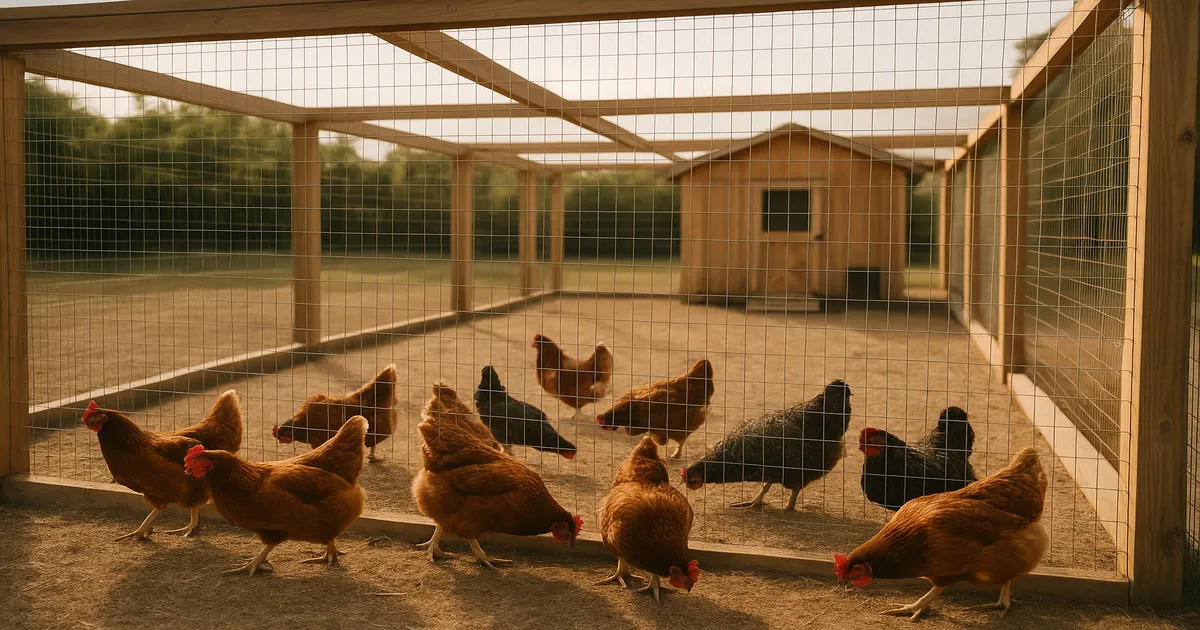
Predator-proofing: Use 1/2-inch hardware cloth on all openings — not chicken wire, which determined predators can tear through. Bury a hardware cloth apron 12 inches deep and 12 inches outward from the coop walls to stop diggers. Install a solid door with a locking latch; raccoons can defeat simple hook-and-eye closures with surprising ease. An automatic coop door such as the ChickenGuard Extreme Auto Door removes the risk of forgetting to close up at dusk and is one of the best investments you can make for a free-ranging flock.
Step 3 — How to Get Guinea Fowl to Free Range: The Confinement Training Method
Six to eight weeks of full confinement is not a suggestion — it’s the foundation of everything. During this period, the coop becomes the birds’ entire world, and that association is what brings them home every evening once you do let them out. Rushing this step is the single most common reason keepers lose their Guineas permanently.
| Phase | Timeline | What to Do |
|---|---|---|
| Full confinement | Weeks 1–4 | Coop and run only; establish a consistent feeding routine |
| Continued confinement | Weeks 5–6 | Same routine; begin calling birds with a consistent sound at feeding time |
| Supervised outings | Weeks 7–8 | 1–2 hours before dusk only; stay nearby |
| Extended range time | Weeks 9–10 | Gradually increase time outside; continue evening feeding |
When you first open the coop door, do it 1–2 hours before dusk — not at dawn. Birds are naturally more settled as evening approaches, and you want those first outings to end with a successful return before dark. Stay close. Don’t let the flock spread across the full property yet. Call them back with the same sound or treat container you’ve been using during confinement.
Common mistakes that reset your progress:
- Releasing too early — even one week too soon can unravel weeks of work
- Releasing in bad weather — disoriented, stressed birds make poor decisions
- Releasing a single bird alone — a lone Guinea will panic and flee; always release the whole flock together
- Skipping the evening feeding — this is your most powerful recall tool; never miss it during training
Step 4 — Use Feeding Routines to Bring Guineas Home
Feed your Guineas twice daily — once in the morning and once in the evening at the coop. The evening feeding is non-negotiable. Pick a consistent time, use a consistent sound (shaking a container of mealworms or sunflower seeds works well), and do it every single day. Over time, your flock will associate that sound with food and the coop with safety.
Adult laying hens need feed at 18–20% protein — game bird layer or turkey layer feed is ideal. Standard chicken layer feed at 16% protein is workable but not optimal for long-term health and production. Free-ranging birds on good pasture during peak insect season can forage 30–50% of their protein needs, so you’ll naturally feed less in summer than in winter. Daily intake for a free-ranging adult is roughly 3–4 oz per bird.
Offer oyster shell free-choice in a separate container for laying hens — a hanging feeder such as the Manna Pro Oyster Shell Feeder keeps it clean and accessible without waste. Keep granite grit available for any birds that aren’t getting natural grit from the ground.
Guineas drink 1–2 cups of water per day, more in hot weather. Place waterers near the coop to draw birds back toward home base throughout the day. Clean and refill daily; Guinea fowl are susceptible to water-borne pathogens and will drink less from dirty or warm water. In winter, a heated waterer such as the Farm Innovators Heated Poultry Fount keeps water ice-free without any extra effort on your part.
Step 5 — Flock Size, Composition, and Social Dynamics
Never keep fewer than 6 Guinea fowl. These are intensely social birds, and a lone Guinea will experience genuine panic — running, calling frantically, and often fleeing the property entirely trying to find other birds. Six is the absolute minimum; 12 or more is ideal for both flock stability and effective pest control.
Aim for 1 male (cock) per 3–5 females (hens). Too many males leads to constant fighting, especially during spring breeding season. A flock of 12 might look like 3 cocks and 9 hens — that balance keeps aggression manageable and the flock cohesive.
Guineas and chickens can coexist, but don’t expect them to behave like the same species. Guineas are territorial and may bully smaller or gentler chicken breeds, particularly around feeders and waterers. They also range farther and return later than chickens. If you run a mixed flock, introduce the two species together from a young age when possible, and provide enough space that each can establish its own patterns.
Managing Free-Range Challenges
Predators and Wandering
Guineas’ alarm calls are a genuine asset — they will alert the entire property to a hawk, fox, or unfamiliar dog. But an alarm call doesn’t make them bulletproof. Aerial predators (hawks and owls) are the top threat for free-ranging birds. Avoid releasing your flock at dawn or dusk when raptor activity peaks. Wooded areas, brush piles, and dense shrubs give birds somewhere to shelter when a hawk passes over.
If birds are consistently drifting toward a neighbor’s property, that area likely has a food source worth investigating — insect-rich pasture or a grain spill are common culprits. The most reliable tools for keeping birds home are the ones you’ve already built: consistent flock size, reliable evening feeding, and a coop the birds genuinely want to return to.
Hidden Nests During Laying Season
Guinea hens hide their clutches well. A hen may lay 20–30 eggs in a shared ground nest before going broody, and you may not find it until she’s already sitting. A broody hen on a ground nest is extremely vulnerable to foxes, raccoons, and dogs.
- Walk your property perimeter and dense vegetation every few days during laying season
- Keep grass mowed short around the coop to discourage nesting close to home
- Collect eggs daily from any known laying spots to prevent clutch buildup
- If you find a broody hen on a nest, consider moving her to a protected enclosure — her survival odds outdoors are not good
Seasonal Free-Range Management
Spring and Summer are peak free-range season. Tick and insect populations are high, and your flock will work hard. Watch for hidden nests from March onward, and monitor male aggression during breeding season — a dominant cock can stress hens enough to reduce laying.
Fall brings molt, typically September through November, which halts egg production for 6–10 weeks. Days shorten, Guineas naturally range less, and it’s a good time to reinforce coop return habits before winter. Supplemental lighting to maintain 14–16 hours of total light per day can push production 4–6 weeks later into the year if desired.
Winter is more manageable than most people expect. In a dry, draft-free coop, adult Guineas handle temperatures down to 0°F (-18°C) without supplemental heat. On mild days they should still go out — movement and foraging keep them mentally healthy. Keep them in during ice storms, heavy snow, and sustained temperatures below 0°F. Wet, icy conditions are far more dangerous than dry cold.
Frequently Asked Questions
How long does it take to train Guinea fowl to free range and return to the coop?
Plan on 8–12 weeks from the start of confinement training to full free ranging. That breaks down as 6–8 weeks of full confinement, followed by 2–4 weeks of supervised outings with gradually increasing range time. Rushing any phase significantly increases the risk of permanently losing birds.
Will Guinea fowl come back on their own at night?
Yes — once properly trained and with a consistent evening feeding routine in place, most flocks return reliably at dusk. Without the confinement period, Guineas default to roosting in trees, and once that habit is established it’s very hard to break. If your birds are already tree-roosting, confine them again for several weeks to reset the behavior.
How many Guinea fowl do I need for effective tick control?
A flock of 12 is the commonly cited minimum for meaningful tick reduction on 2–5 acres. Smaller flocks will still help, but the impact is less dramatic. The more ground your property covers, the larger the flock you’ll want.
What do I do if my Guinea fowl won’t go back into the coop at night?
Make the coop as dark and inviting as possible at dusk — Guineas are drawn to dark, enclosed spaces when they’re ready to settle. Shake a treat container of mealworms at the coop entrance. A long herding stick can gently guide stragglers toward the door without causing panic. If the problem persists, go back to basics: confine the flock for another 2–4 weeks to reinforce the coop association before trying again.
Can Guinea fowl free range with chickens?
Yes, with caveats. Guineas are territorial and may bully calmer or smaller chicken breeds, particularly around food and water. They also range farther and don’t follow the same daily rhythms as chickens. A mixed flock works best when the two species are raised together from a young age and have ample space to establish their own patterns.