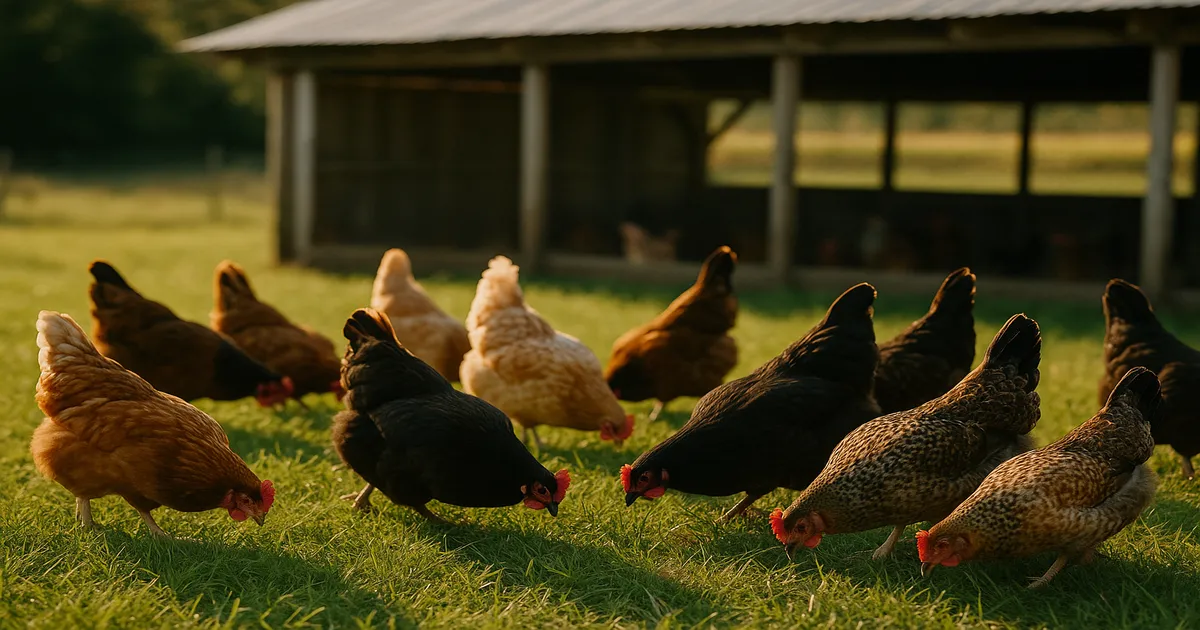
Quick Answer: Increasing flock size can reduce bullying by spreading a bully’s attention across more targets — but only if your space scales up proportionally. Add birds to an already cramped coop and you’ll almost certainly make things worse. Breed temperament and available square footage matter far more than headcount alone.
Does Increasing Flock Size Help Reduce Bullying?
Whether increasing flock size helps reduce bullying depends almost entirely on two things: how much space you have and what breeds you’re keeping. The core logic is sound — a dominant hen can only harass so many birds at once, so more flock members means each individual absorbs less aggression. But that math only works when space grows with the numbers.
When more birds helps:
- You have adequate space for the new additions (6–8 sq ft per bird inside, 15–20 sq ft per bird in the run)
- Your existing flock is 4 birds or fewer and one hen is dominating everyone
- You’re adding birds of similar size and compatible temperament
When more birds makes things worse:
- Your coop or run is already at or near capacity
- You’re introducing assertive breeds (Rhode Island Red, Leghorn) into a flock that includes vulnerable ones (Silkie, Polish, Faverolles)
- The root cause is boredom or nutritional stress — problems that more birds simply amplify
Understanding the Pecking Order and Why Bullying Happens
Chickens are hardwired social animals, and their hierarchy isn’t a flaw — it’s a feature. Every flock establishes a linear dominance structure where each bird knows its rank relative to every other. Once that structure is stable, serious conflict actually decreases. The top hen doesn’t need to prove herself every morning; everyone already knows the rules.
Disruptions are where things go wrong. Introducing new birds, losing a flock member, overcrowding, illness, or even a sudden change in routine can destabilize the hierarchy and trigger a fresh round of rank-setting. Boredom — especially in confined flocks with nothing to do — is another major trigger that’s easy to overlook.
A quick peck that sends a lower-ranked hen scurrying is normal. What you’re watching for is relentless targeting: one bird being chased away from the feeder repeatedly, losing feathers, hiding in a corner, or showing wounds. If a hen is losing weight while the rest of the flock looks fine, that’s chronic bullying — and it warrants action.
How Flock Size Affects Bullying: Small, Medium, and Large Flocks
Small Flocks (2–4 Birds): Concentrated Aggression Risk
In a tiny flock, one aggressive hen can make life miserable for everyone. There’s nowhere to hide, no social buffer, and the bully’s attention is fully concentrated on a very small pool of targets. If you have three hens and one is a tyrant, the other two bear the full weight of her aggression every single day.
Medium Flocks (6–12 Birds): The Backyard Sweet Spot
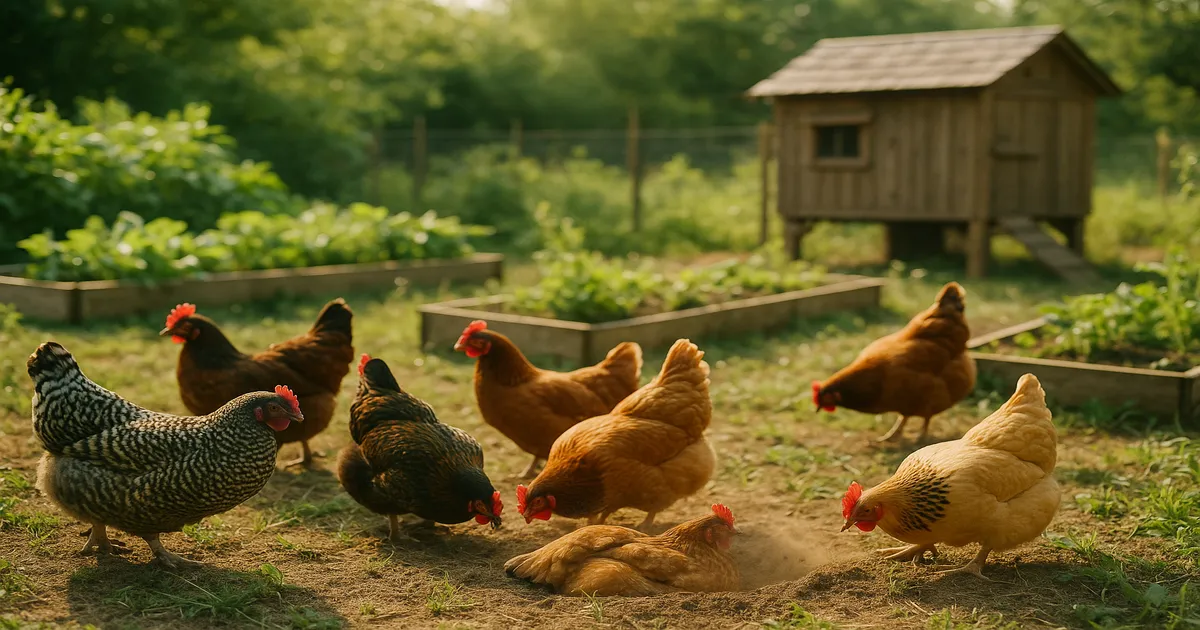
This is where the math starts working in your favor. With 8 birds, a dominant hen simply can’t monitor every subordinate at once. Aggression gets distributed, subordinate birds have more opportunities to avoid conflict, and overall stress drops. Poultry science consistently points to 6–10 birds as the sweet spot for backyard flocks — large enough to dilute aggression, small enough to manage individually and spot problems early.
Large Flocks (15–30+ Birds): Diluted Aggression, With Caveats
In larger flocks, dominant birds physically cannot police every subordinate. Bullying becomes statistically diluted, and mid-ranking birds often form loose social groups that offer some protection. The caveat is real, though: these dynamics only hold up when space scales with numbers. Pack more birds into the same footprint and you’ve solved nothing.
The Overcrowding Problem
This cannot be overstated. Adding birds to an already cramped space almost always worsens bullying, regardless of total flock size. Overcrowding forces subordinate birds into constant proximity with dominant ones — they can’t retreat, can’t avoid, and stress compounds fast. Do the space math before you add a single bird.
Space Is the Real Variable: Coop and Run Requirements
How Much Space Do You Actually Need?
- Inside the coop: 4 sq ft per bird minimum; 6–8 sq ft per bird recommended for genuine flock harmony
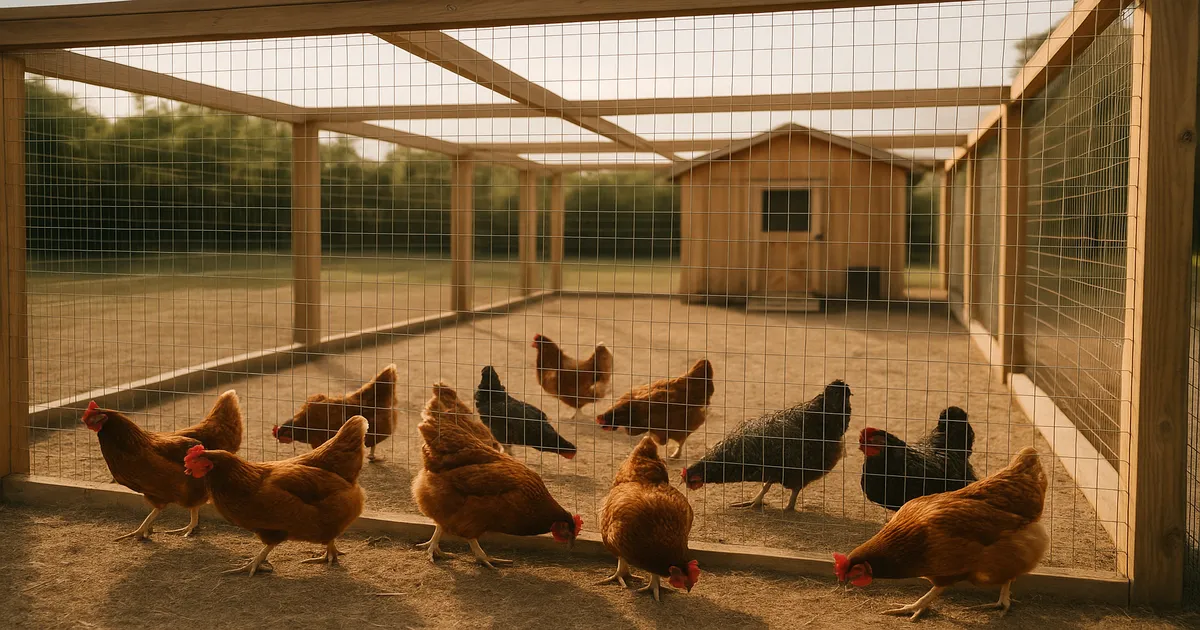
- In the run: 10 sq ft per bird minimum; 15–20 sq ft per bird is where bullying meaningfully drops
- Free-range or large pasture: 50–100+ sq ft per bird essentially eliminates space-related aggression
When in doubt, calculate on the larger end. You can add birds later; retrofitting space is much harder.
Why Run Space Matters as Much as Coop Space
Most backyard keepers obsess over coop square footage and underestimate the run. But chickens spend the bulk of their waking hours outside, and a cramped run is where most daytime bullying happens. Generous run space gives subordinate birds room to simply walk away — their primary natural defense.
Visual Barriers: The Underrated Fix
Raw square footage isn’t the whole story. A hen being chased across an open run has nowhere to go even if the run is technically large enough. Visual barriers — a leaned pallet, shrubs, low branches, or a freestanding perch — let subordinate birds break line of sight with aggressors. It’s one of the cheapest and most effective anti-bullying interventions you can make.
Roost Space, Nest Boxes, and Coop Design
- Roost space: 8–10 inches of linear bar per standard bird; 12 inches for large breeds like Brahma or Cochin
- Multiple roost levels at different heights reduce competition for prime top spots
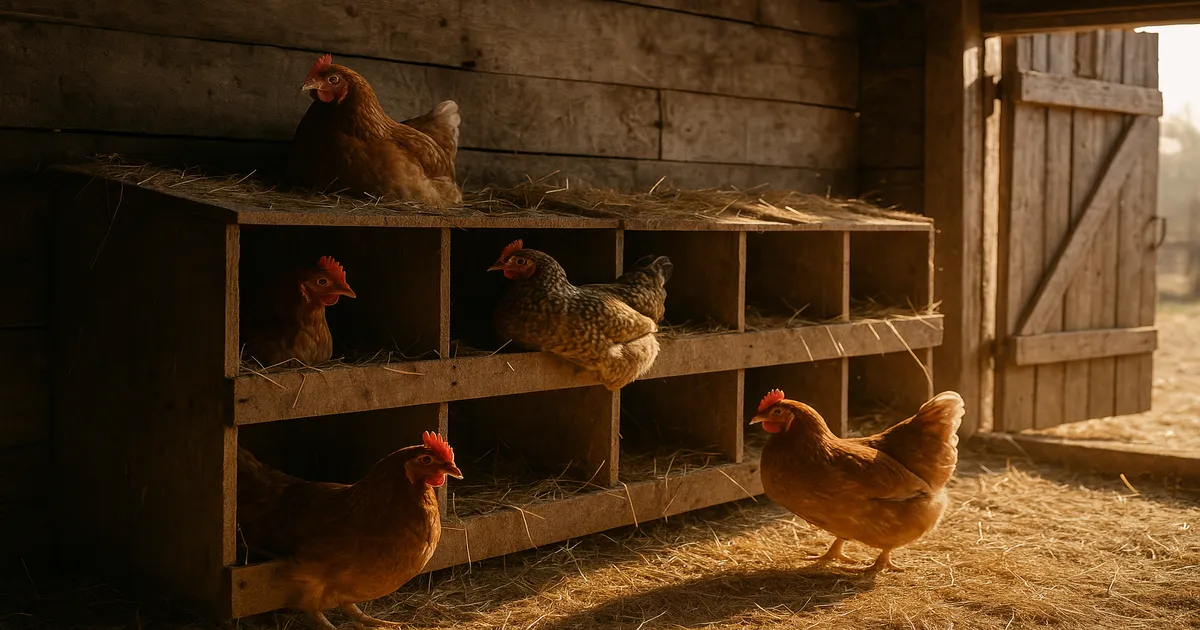
- Nesting boxes: 1 box per 4–5 hens; 12×12×12 inches for standard breeds, 14×14×14 for large breeds
- Curtains on nest boxes dramatically reduce box-guarding by dominant hens
Poor ventilation lets ammonia build up, and levels above 25 ppm cause respiratory irritation and chronic stress — which feeds directly into bullying. Aim for at least 1 sq ft of ventilation per 10 sq ft of floor space, positioned above roost level to avoid drafts. The deep litter method (6–8 inches of pine shavings, turned regularly) keeps ammonia low and gives birds something to scratch through, cutting boredom-driven pecking.
Breed Temperament: Often More Important Than Flock Size
Docile Breeds That Rarely Initiate Bullying
Breed selection is arguably more important than flock size when it comes to harmony. These breeds are consistently calm and rarely start trouble:
- Buff Orpington — Exceptionally gentle, tolerates confinement well, 3–4 eggs/week (light brown)
- Australorp — Calm, friendly, outstanding layer at 4–5 eggs/week; beautiful black iridescent plumage
- Brahma — Large, feather-footed, famously docile; 3 eggs/week (brown); excellent cold hardiness
- Cochin — Extremely calm, heavily feathered legs; better brooder than layer
- Wyandotte — Confident but not aggressive; rose comb makes them cold-hardy; 3–4 eggs/week (brown)
- Sussex — Curious, active foragers, friendly disposition; 4–5 eggs/week (light brown to tinted)
- Easter Egger — Generally easy-going; blue/green eggs are a bonus
Assertive Breeds That Need Careful Management
- Rhode Island Red — Excellent layer (5–6 eggs/week, brown), but hens can be assertive and roosters aggressive
- New Hampshire Red — Similar temperament to Rhode Island Reds; competitive at the feeder
- Leghorn — The commercial laying champion at 5–6 eggs/week (white), but flighty and high-strung in mixed flocks
- Old English Game — Bred for fighting. Not recommended for mixed backyard flocks, full stop
Vulnerable Breeds That Are Frequently Bullied
Silkies, Polish, and Faverolles are the most common bullying victims. Silkies and Polish have crest feathers that limit their vision, making them slow to react to aggression and easy targets. Faverolles are gentle to the point of passivity. All three should be kept with similarly calm, same-sized birds rather than with assertive breeds.
Size matters too. Large breeds like Brahma and Cochin can unintentionally injure small birds even without aggressive intent. Bantams are best kept with other bantams or in a separate run. If you do mix bantams with standards, you’ll need extra space, extra visual barriers, and a close eye on dynamics.
Feeding Strategies That Reduce Competition and Bullying
Resource-blocking is a major secondary bullying mechanism. A dominant hen guarding the feeder isn’t just being annoying — she’s creating nutritional deficiencies in subordinate birds that further suppress laying and overall health.
Provide 4–6 inches of linear feeder space per bird as a minimum, using multiple feeders in different parts of the run — ideally not in a straight line of sight from each other. The same principle applies to waterers (Harris Farms 5-Gallon Plastic Poultry Waterer): at least one per 6–8 birds, spread around the space. One feeder in one corner is an open invitation for a dominant hen to stand guard.
Hanging a cabbage head or corn on the cob does double duty — it gives the flock something to work at together (reducing boredom-driven pecking) and it’s hard for one bird to monopolize.
The Nutritional Link to Feather-Pecking
Feather-pecking — where hens pull and eat each other’s feathers — is often a sign of low dietary protein rather than pure aggression. Layer feed should contain 15–18% protein; bump to 18–20% during molt or high-production periods. If feather-pecking is your main issue, check your feed label before assuming it’s a behavioral problem.
Keep treats — scratch, mealworms, table scraps — to no more than 10% of total daily intake, roughly 1–2 tablespoons of scratch per bird per day. Scratch grains run only 8–10% protein and quietly undermine egg production and feather quality when overused.
Practical Steps to Reduce Bullying Without Adding Birds
Diagnose the Root Cause First
Before you do anything else, figure out why the bullying is happening. Is the coop overcrowded? Is there only one feeder? Did you recently add new birds or lose one? Is one specific hen the aggressor, or is it more diffuse? The fix for boredom-driven pecking is completely different from the fix for a space problem. Adding birds without diagnosing the root cause often makes things worse.
Environmental Enrichment
Bored chickens peck each other. Give them something better to do:
- A dust bath area (at least 2 sq ft per bird, filled with dry dirt or sand)
- Hanging vegetables or treat balls
- Perches and platforms at different heights in the run
- Extra ground cover — straw, leaves, or wood chips to scratch through
Safe Integration When You Do Add Birds
The see-but-don’t-touch method works well. Keep new birds in a wire partition within the run for 1–2 weeks so the flocks can observe each other without physical contact. When you open the partition, do it in the morning with fresh distractions — new bedding, scattered treats, a hanging cabbage. Never add just one new bird to an established flock; add two or more so they have a buddy and aren’t the sole target.
Isolating a Chronic Bully
Temporarily removing the aggressor — even for just 3–5 days — can reset flock dynamics significantly. When she returns, she’ll be low-ranking again and will need to re-establish her position, which often takes the edge off her aggression. It doesn’t always work permanently, but it’s worth trying before more drastic measures.
When Rehoming Is the Right Answer
Some hens are simply chronic aggressors, and no amount of enrichment or space will change that. If one bird is consistently drawing blood, preventing others from eating, or causing production drops across the flock, rehoming her is the most humane outcome for everyone — including her, since a new flock where she isn’t the problem bird can genuinely improve her quality of life.
The bottom line on flock size: Increasing your flock can genuinely help reduce bullying if you have the space and compatible breeds. But it’s one lever among many — and rarely the first one you should pull.
Frequently Asked Questions
Does increasing flock size help reduce bullying in backyard chickens?
It can, but it’s not guaranteed. Adding birds dilutes a bully’s attention across more targets, which reduces per-bird stress — but only if you have adequate space to support the larger flock. If your coop or run is already crowded, adding birds will almost certainly make bullying worse, not better.
What is the ideal flock size to minimize pecking order aggression?
For most backyard situations, 6–10 birds is the sweet spot. This is large enough that aggression gets distributed across the group rather than concentrated on one or two individuals, but small enough that you can monitor each bird’s health individually. Beyond 10–12 birds, management becomes more complex and you’ll need significantly more space to maintain harmony.
Which chicken breeds are least likely to bully other birds?
Buff Orpingtons, Australorps, Brahmas, Cochins, Wyandottes, and Sussex are consistently the most docile and least likely to initiate bullying. Easter Eggers are also a solid choice for mixed flocks. Avoid mixing assertive breeds like Rhode Island Reds or Leghorns with gentle breeds like Silkies or Faverolles — that combination reliably produces problems.
How much space do I need per chicken to prevent bullying?
Inside the coop, aim for 6–8 sq ft per standard bird (4 sq ft is the bare minimum). In the outdoor run, 15–20 sq ft per bird is where you’ll see bullying meaningfully decrease; 10 sq ft is the minimum but leaves little margin. More space is almost always better — it’s the single most reliable way to reduce flock tension.
What should I do if one hen is bullying all the others?
Start by ruling out overcrowding, feeder competition, and boredom. Add a second feeder, introduce visual barriers, and provide enrichment. If the problem persists, temporarily remove the aggressor for 3–5 days to reset the hierarchy. If she returns to the same behavior repeatedly, rehoming her is often the kindest solution for the whole flock.