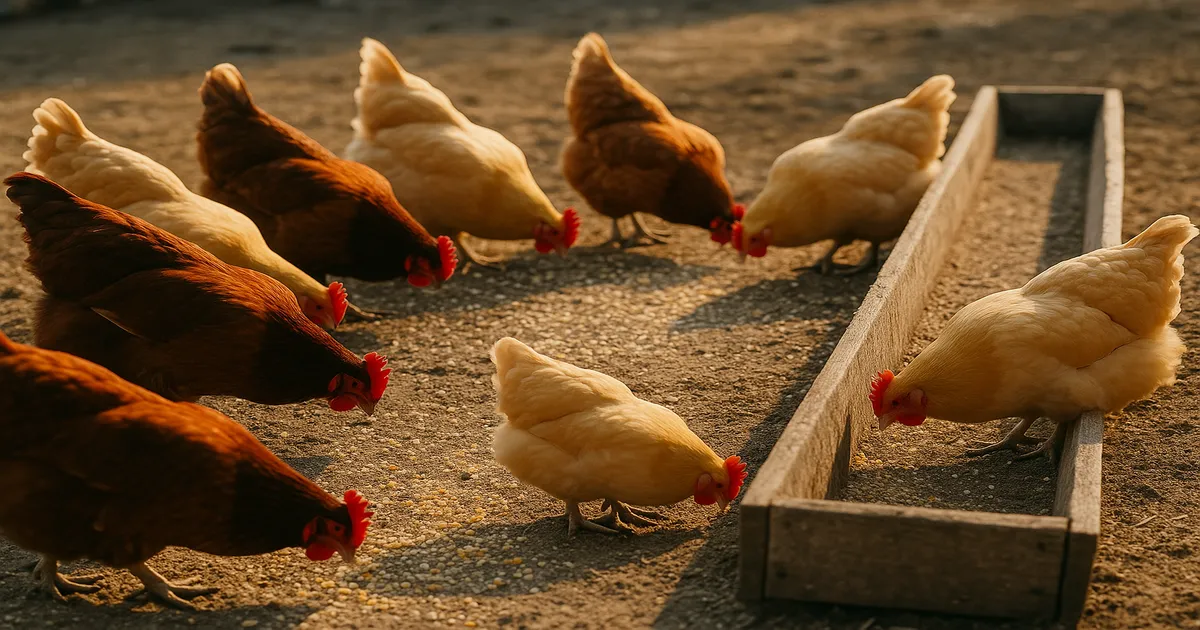
Quick Answer: For most backyard flocks, Purina and Nutrena NatureWise are the best all-around chicken feed brands thanks to consistent formulations and wide availability. If organic or soy-free ingredients matter to you, Scratch and Peck is the top pick. Budget-conscious keepers get solid value from Dumor at Tractor Supply.
Feed is the single biggest expense in keeping backyard chickens — accounting for 60–70% of total flock-keeping costs. With dozens of chicken feed brands on the market, from national giants to regional mills, choosing the right one can feel overwhelming. This guide cuts through the noise with honest brand comparisons, life-stage feeding guidance, and practical advice on supplements, storage, and what no single bag of feed covers on its own.
Which Chicken Feed Brand Is Right for Your Flock?
Top Picks at a Glance
| Category | Best Pick | Runner-Up |
|---|---|---|
| Best Overall | Purina | Nutrena NatureWise |
| Best Organic | Scratch and Peck | Modesto Milling |
| Best Budget | Dumor | Store/Co-op brands |
| Best Soy-Free | Hiland Naturals | Scratch and Peck Soy-Free |
| Best Mixed Flock | Kalmbach All Flock | Purina Flock Raiser |
Matching a Brand to Your Flock’s Needs
The right brand comes down to three things: your flock’s life stage, your ingredient priorities, and your budget. A keeper with vaccinated laying hens and no dietary concerns does just fine on Purina Layena. Someone raising heritage breeds and selling eggs at a premium farmers market might find Scratch and Peck’s organic credentials worth the 40–80% price premium. Neither choice is wrong — they’re just different priorities.
Understanding the Chicken Feed Brand Landscape
National Brands vs. Regional Mills vs. Co-op Feeds
The market breaks into three tiers. National brands — Purina, Nutrena, Manna Pro — offer consistent formulations, wide retail availability, and reliable quality control. Regional specialists like Kalmbach (Midwest), Scratch and Peck (Pacific Northwest), and Hiland Naturals bring tighter ingredient sourcing and niche certifications. Local co-op and mill feeds are often the freshest option of all, milled close to the point of sale — though you’ll get less nutritional detail on the bag.
Feed Forms: Pellets, Crumbles, Mash, and Whole Grain
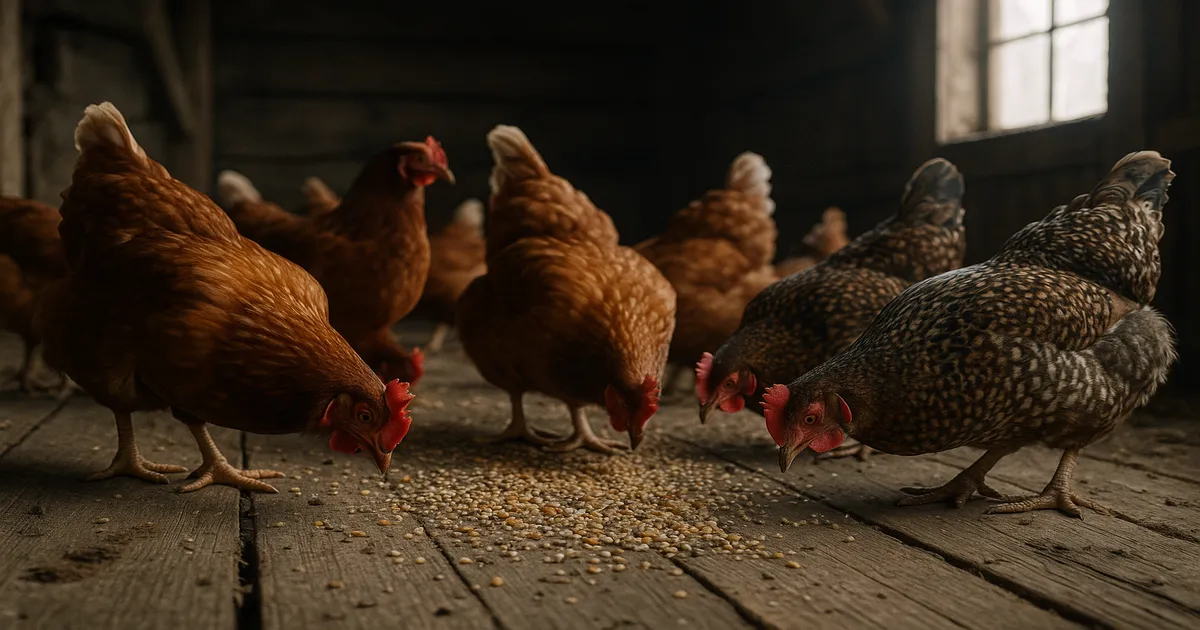
- Pellets — Compressed cylinders; the least wasteful form and the best choice for adult hens. Most national brands lead with pellets.
- Crumbles — Broken-down pellets; easier for chicks and young pullets to eat, with slightly more waste than pellets.
- Mash — Finely ground loose feed; easy to mix supplements into, but produces the most waste and spoils quickly if wet. Discard any moistened mash within four hours.
- Whole grain — Minimally processed; Scratch and Peck’s signature style. Good nutritional integrity, but hens need adequate insoluble grit to process it properly.
What the Labels Actually Mean
These terms are not interchangeable. Certified organic (USDA NOP) means no synthetic pesticides, no GMO ingredients, and no synthetic amino acids. Non-GMO simply avoids genetically modified crops — synthetic pesticides may still be used. Soy-free feeds (Hiland Naturals, Scratch and Peck Soy-Free) replace soy protein with peas, lentils, or fishmeal, which appeals to keepers concerned about phytoestrogens or soy sensitivities among egg consumers. Expect to pay 40–80% more for certified organic, with an additional 10–20% premium for soy-free on top of that.
Chicken Feed Brands by Life Stage
Chick Starter Feeds (Weeks 0–8): Medicated vs. Unmedicated
Chick starters run 18–22% crude protein to fuel rapid early growth. Strong options include Purina Start & Grow (18%), Nutrena NatureWise Chick Starter (18%), Kalmbach Chick Starter (20%), and Scratch and Peck Starter (18%).
The medicated vs. unmedicated question comes down to one thing: coccidiosis vaccination. If your chicks were not vaccinated at the hatchery, use a medicated starter containing amprolium. If they were vaccinated, use unmedicated — amprolium interferes with the vaccine’s effectiveness. When in doubt, call your hatchery before you buy.
Grower and Developer Feeds (Weeks 8–18)
This is the stage most beginners skip, jumping straight from starter to layer feed — and that’s a mistake. Grower feeds sit at 16–18% protein with low calcium (around 0.8–1.0%), which protects developing kidneys from the high calcium levels in layer feed. Purina Flock Raiser, Nutrena NatureWise All Flock, and Dumor Grower all work well here. All-flock style feeds are especially practical for mixed-age or mixed-species situations.
Layer Feeds (Weeks 18–20 Onward)
Layer feed delivers 15–18% protein and 3.5–4.5% calcium to support consistent egg production and strong shells. Here’s how the major brands compare:
| Brand / Product | Crude Protein | Calcium | Form |
|---|---|---|---|
| Purina Layena | 16% | 4.0% | Pellet/Crumble |
| Nutrena NatureWise Layer | 16% | 4.25% | Pellet |
| Kalmbach 17% Layer | 17% | 4.0% | Pellet |
| Scratch and Peck Layer | 16% | 4.5% | Whole Grain Mash |
| Dumor Layer | 16% | 3.8% | Pellet/Crumble |
| Hiland Naturals Layer | 16% | 4.0% | Pellet |
Formulations are updated periodically — always verify the current feed tag.
Standard hens eat about 4 oz per day. Large breeds like Brahmas and Jersey Giants need 5–6 oz, while bantams get by on 2–2.5 oz.
Molt and High-Protein Feeds
During molt — typically 8–16 weeks in fall — hens redirect protein from egg production to feather regrowth. Expect a 50–90% production drop regardless of what brand you’re feeding. The fix is temporarily bumping protein to 18–20% by switching to a flock raiser or grower feed, with oyster shell offered free-choice on the side. Black oil sunflower seeds (BOSS) are a popular addition during this period — they’re rich in methionine, an amino acid critical for feather keratin synthesis.
Top Chicken Feed Brands Reviewed
Purina (Start & Grow, Layena, Flock Raiser)
Purina is the benchmark brand for good reason. The full life-stage lineup is consistent, stocked at farm stores and independent retailers nationwide, and backed by decades of nutritional research. Purina Layena is the go-to recommendation for most backyard keepers. The Layena Plus Omega-3 version adds marigold extract and flaxseed, producing noticeably deeper-orange yolks. The main downside: no organic or non-GMO certification.
Nutrena NatureWise
Nutrena’s NatureWise line is a close competitor to Purina across the board. Keepers frequently praise the pellet density — the pellets hold their shape well and produce minimal dust or fines. Availability is strong at Tractor Supply and regional farm stores. The NatureWise All Flock is a particularly versatile option for mixed flocks or anyone who wants one feed to cover multiple life stages.
Kalmbach Feeds
Kalmbach has a loyal following in the Midwest and is increasingly available online. Their 17% layer pellet gives a meaningful protein edge over most 16% competitors — useful for high-production breeds or hens recovering from molt. The Henhouse Reserve line adds whole grains and prebiotics for keepers who want a step above standard pellets. Distribution outside the Midwest can be patchy, so check availability before committing.
Scratch and Peck: Best Certified Organic Chicken Feed Brand
Scratch and Peck is the clear leader for keepers who prioritize certified organic and soy-free credentials. Based in the Pacific Northwest, their whole-grain mash style encourages natural foraging behavior as hens pick through the feed. The trade-offs are real — more waste than pellets and a noticeably higher price tag. But if you’re marketing eggs as organic-fed or have household members with soy concerns, no other mainstream brand matches their certification stack.
Dumor: Best Budget Chicken Feed Brand
Dumor is Tractor Supply’s house brand, and it punches well above its price point. The layer pellets and crumbles are nutritionally competitive with Purina and Nutrena at a lower cost. It won’t win awards for ingredient sourcing, but for a keeper managing a large flock on a tight budget, Dumor is a genuinely solid choice — not a compromise.
Hiland Naturals: Best Soy-Free Option
Hiland Naturals fills an important gap: soy-free, non-GMO layer feed without a full commitment to organic pricing. Peas, lentils, and fishmeal replace soy as the primary protein sources, delivering a slightly different amino acid profile. It’s popular with natural-keeping communities and keepers whose egg customers have soy sensitivities.
Manna Pro, Prairie’s Best, and Local Mills
Manna Pro has a broad product line — feed, supplements, grit, and treats — making it convenient for one-stop shopping. Prairie’s Best is gaining traction for whole-grain, non-GMO formulations at a more accessible price than Scratch and Peck. Both are worth considering if they’re well-stocked locally.
Don’t overlook local feed mills either. Fresh-milled feed hasn’t been sitting in a warehouse, so vitamins are more intact. Shelf life is shorter (typically 6–8 weeks from mill date), and nutritional specs may be less prominently labeled — ask for the feed tag. If a mill is within reasonable driving distance, it’s worth a visit.
What Feed Brand Choice Actually Affects
Egg Production, Shell Quality, and Yolk Colour
The 15–18% crude protein window is where consistent laying happens. High-production breeds — Leghorns, ISA Browns, Golden Comets — can hit 5–6 eggs per week on a well-balanced layer feed. Rhode Island Reds, Plymouth Rocks, and Australorps average 4–5 eggs per week on standard 16% layer feed. Heritage and dual-purpose breeds like Buff Orpingtons and Brahmas typically produce 3–4 eggs per week and benefit from a slight protein boost during molt.
Shell quality is directly nutrition-dependent. Thin shells, soft shells, or shell-less eggs almost always point to calcium deficiency — not a brand problem, but a supplementation gap. Yolk colour is also feed-influenced: hens with access to pasture, leafy greens, or marigold-enriched feeds like Purina Layena Plus Omega-3 produce noticeably deeper orange yolks. Egg shell colour, however, is purely genetic. No feed will turn a Leghorn’s white egg brown.
Seasonal Drops: What Feed Can and Cannot Fix
A 50–90% production drop during molt is normal and happens regardless of brand. In winter, the bigger lever is light, not feed — hens need 14–16 hours of light to maintain laying, and supplemental lighting makes more difference than any feed upgrade. That said, keeping protein levels solid through fall and winter supports faster molt recovery and better overall condition heading into spring.
When to Switch from Starter to Layer Feed
Make the switch at 18–20 weeks, or when you see the first egg — whichever comes first. Don’t rush it. Introducing layer feed’s high calcium before 16 weeks can stress developing kidneys. For mixed-age flocks, use an all-flock feed with oyster shell offered free-choice on the side — layers get the calcium they need without over-supplementing younger birds.
Supplements and Storage: What No Feed Brand Covers Alone
Oyster Shell and Grit
Offer free-choice oyster shell in a separate container alongside any layer feed. Hens self-regulate their intake — they’ll eat more when shell quality is poor and less when it’s fine. Never mix oyster shell directly into feed; roosters and pullets don’t need the extra calcium, and forced supplementation over time can cause kidney damage.
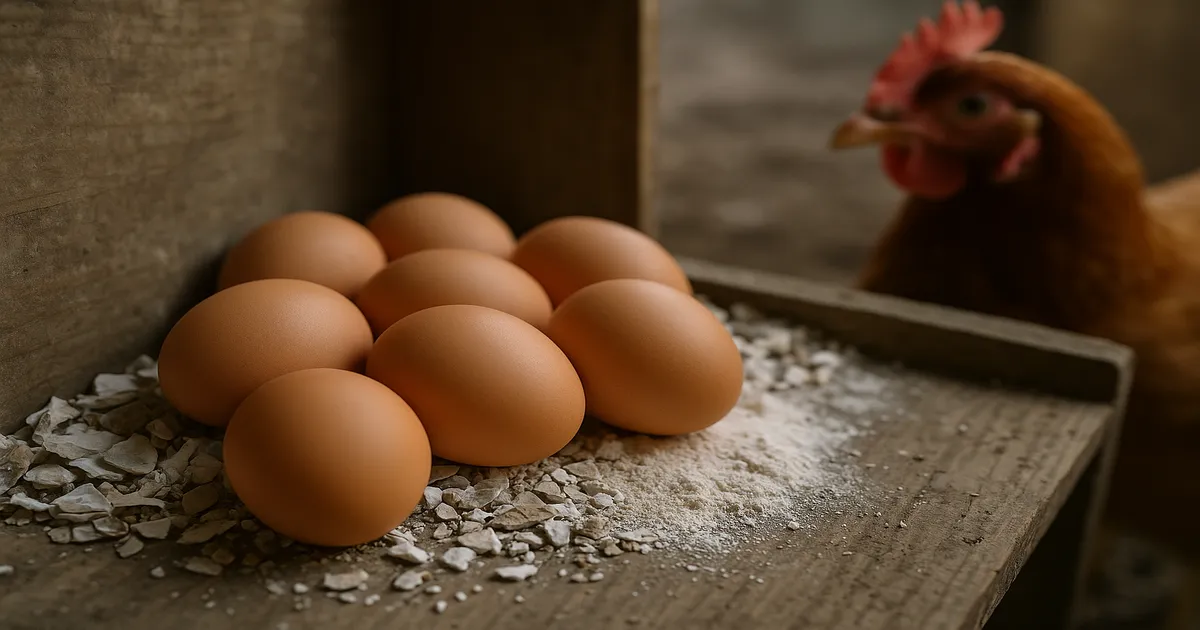
Crushed baked eggshells work as a free alternative. Bake them at 250°F (121°C) for 30 minutes to kill pathogens, then crush them well so they don’t resemble whole eggs (which can encourage egg-eating behavior). They’re slightly less calcium-dense than oyster shell but effective.
Hens on commercial pellets alone don’t strictly need supplemental grit — the pellets are already finely ground. But the moment you add scratch grains, whole treats, or anything fibrous, insoluble grit becomes essential. Offer it free-choice in a separate container; a 5-lb bag lasts a flock of six hens about 4–6 weeks.
Treats and the 90/10 Rule
Keep treats to a maximum of 10% of daily intake — about 0.4 oz (11g) for a standard hen eating 4 oz of feed per day. Good options include dried mealworms, leafy greens, watermelon in summer, and plain yogurt. Scratch grains are a treat, not a feed — limit them to 1–2 tablespoons per bird per day, scattered in the run for enrichment rather than dumped in a feeder.
Foods to avoid entirely: avocado (persin toxicity), chocolate, onions, raw or dried beans (phytohaemagglutinin toxicity), salty processed foods, and anything mouldy.
Storing Feed Properly
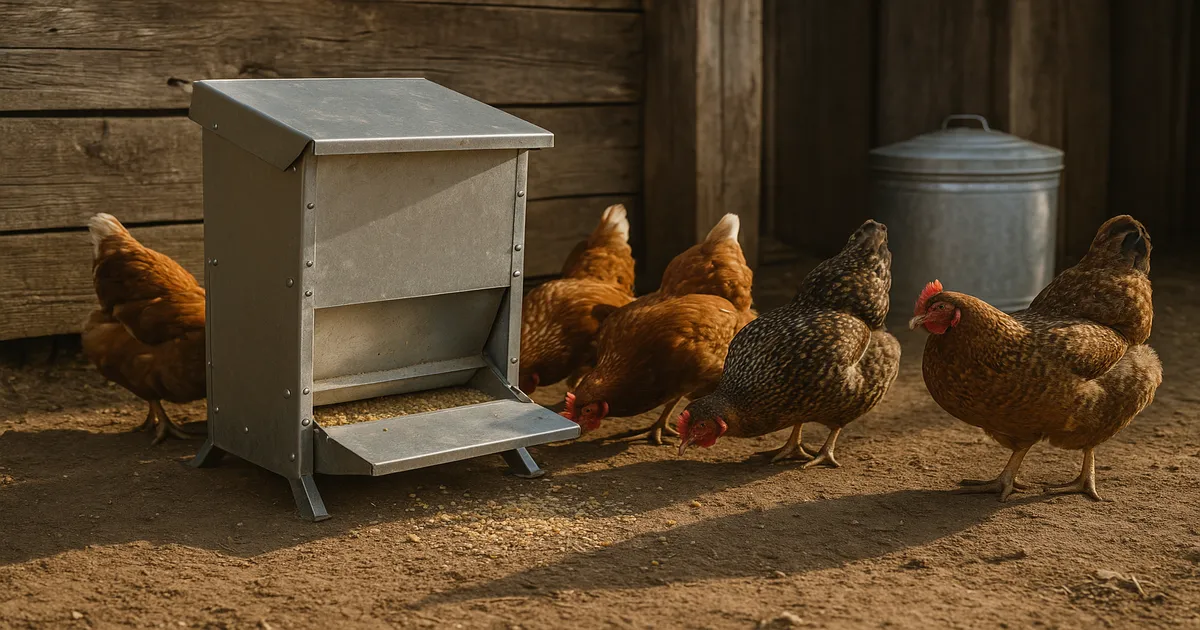
Galvanised metal trash cans with locking lids are the gold standard for feed storage. Plastic bins are convenient but rodents chew through them easily, and contaminated feed is a genuine Salmonella risk. Store feed in a cool, dry location — ideally 50–70°F (10–21°C). Temperatures above 85°F (29°C) degrade vitamins and accelerate mould growth.
Shelf life by feed type:
- Commercial pellets and crumbles: 3–4 months from mill date
- Whole grain feeds: Up to 6 months if kept dry
- Mash: 2–3 months
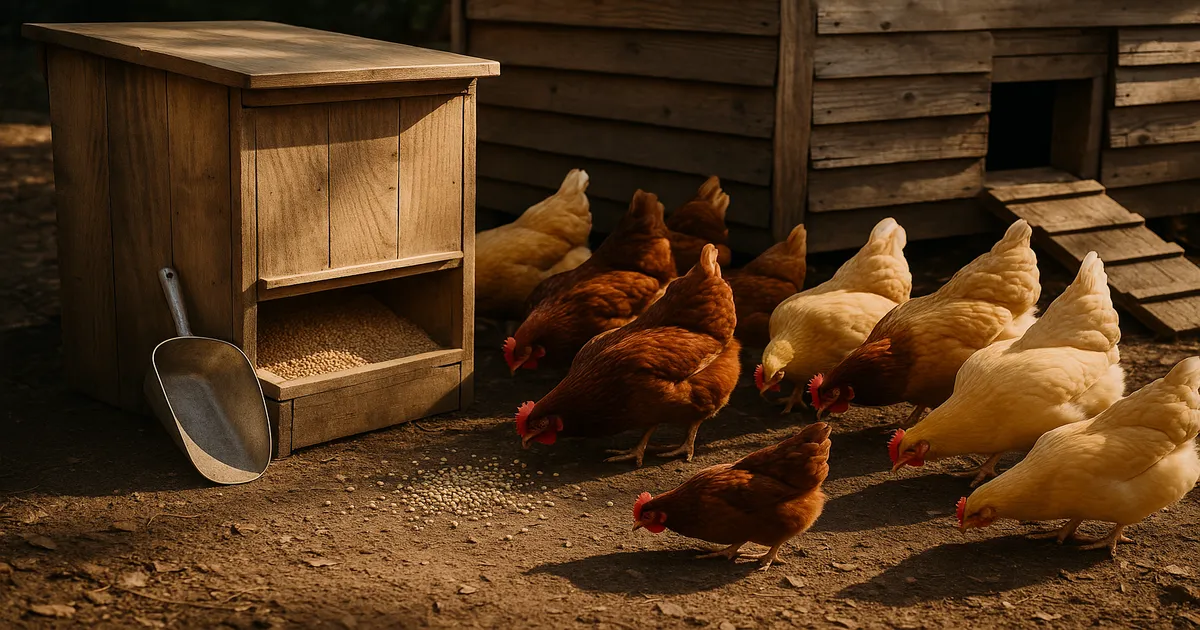
Buy only what your flock will consume in 4–6 weeks. For six standard hens eating 4 oz each per day, that’s roughly 10–11 lbs per week — so a 50-lb bag lasts about 4–5 weeks. Do the math for your flock size before hauling home a pallet.
Frequently Asked Questions About Chicken Feed Brands
What is the best chicken feed brand for laying hens?
Purina Layena is the most widely recommended layer feed for backyard flocks — consistent 16% protein, reliable 4.0% calcium, and available nearly everywhere. Nutrena NatureWise Layer is an equally strong alternative. For organic-fed hens, Scratch and Peck Organic Layer is the top pick.
Is Purina or Nutrena chicken feed better?
Both are excellent, and most hens won’t notice the difference. Purina has a slight edge in distribution and brand recognition; Nutrena is often praised for pellet density and lower dust. Try whichever is more consistently available locally — reliable supply matters more than minor formulation differences.
What chicken feed produces the most eggs?
No single brand unlocks more eggs. Production is primarily driven by breed genetics, light exposure, and meeting basic nutritional targets. Any feed delivering 15–18% crude protein and 3.5–4.5% calcium will support maximum laying for your breed. High-production breeds like ISA Browns and Leghorns will out-lay heritage breeds regardless of which brand is in the feeder.
Is organic chicken feed worth the extra cost?
It depends on your priorities. Organic feed costs 40–80% more than conventional, and peer-reviewed research doesn’t show meaningful differences in egg nutrition or hen health when protein and calcium targets are met either way. If organic certification, non-GMO sourcing, or soy-free ingredients matter to you — or to your egg customers — the premium is worth it. If not, a quality conventional feed like Purina Layena or Nutrena NatureWise does the job reliably.
Can I mix different chicken feed brands?
Yes, and it’s sometimes necessary when switching brands or running low on supply. Transition gradually over 7–10 days by mixing the old and new feeds to avoid digestive upset. The main thing to watch is that the combined protein and calcium levels stay within the appropriate range for your flock’s life stage.