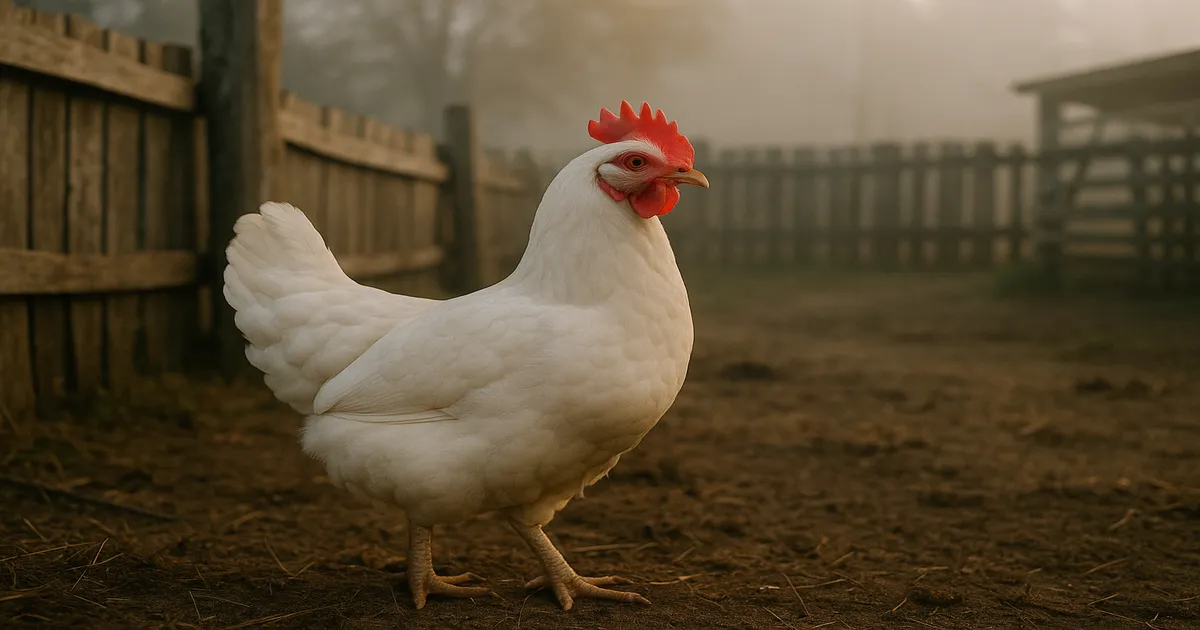
Quick Answer: Yes, you can eat White Leghorn chickens — but go in with realistic expectations. They’re a production laying breed, not a meat bird, so the carcass is lean and small-framed with a dressed yield of just 2–3 lbs. They’re best suited for slow cooking, broth, and stews rather than roasting.
Can You Eat White Leghorn Chickens? The Honest Answer
Absolutely — White Leghorn chickens are edible. But “can you eat them” and “should you raise them for meat” are two very different questions. If you already keep them for eggs and need to process a spent hen or surplus rooster, they’re a perfectly reasonable candidate for the pot. If you’re hoping for a bird that pulls its weight at both the nest box and the dinner table, a White Leghorn will disappoint you.
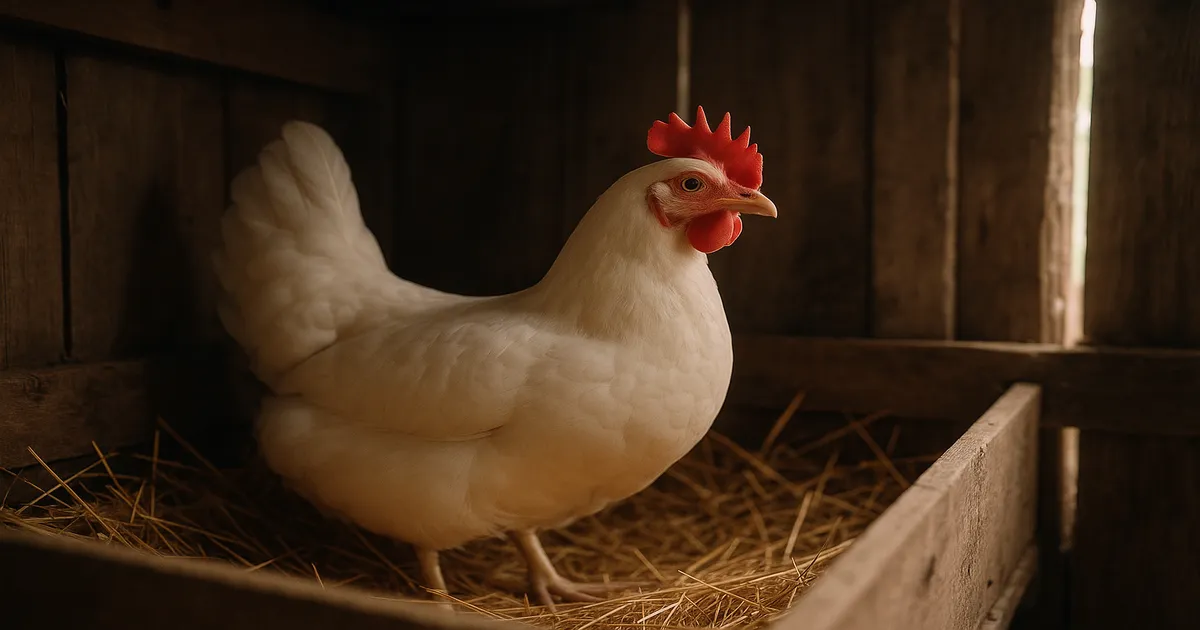
Everything about this breed is optimized for egg production, not muscle development. Their slim, wedge-shaped frame carries a narrow breast, thin skin, and minimal fat. A dressed hen typically yields just 2–3 lbs of meat — roughly 50–60% of her live weight — and even that modest yield comes with lean, firm muscle that turns tough if you cook it wrong.
Historically, spent commercial White Leghorn hens didn’t end up as roasters. They went into soup, stew, canned chicken, and processed products — cooking methods that work with the bird’s texture rather than against it. That tradition tells you everything about how to approach them in your own kitchen.
When Eating a White Leghorn Makes Sense
There are three situations where processing a White Leghorn is a perfectly reasonable decision:
- Aging hens whose egg production has declined significantly after year two or three
- Surplus roosters hatched from your own eggs that you don’t need in your flock
- Breed evaluation — you want to understand firsthand whether Leghorns fit your homestead goals before committing to a larger flock
In all three cases, the key is knowing how to cook them. More on that below.
White Leghorn Breed Background: Built for Eggs, Not Meat
Origin and History
The Leghorn breed originated in Livorno, Italy — Leghorn is the English name for the city — in the early 19th century. They arrived in the United States around 1828 and were admitted to the American Poultry Association’s Standard of Perfection in 1874. The White variety quickly became the dominant commercial laying breed in North America, a position it still holds today.
Classification and Body Type
White Leghorns belong to the Mediterranean class of chickens, a grouping that includes other lightweight, high-production breeds. Mediterranean-class birds are defined by lean bodies, active temperaments, and white earlobes — that last detail being a reliable indicator of white egg production. Hens weigh 4–5 lbs at maturity; roosters reach 6–7.5 lbs. Neither figure leaves much room for a meaningful meat yield.
It’s also worth noting that White Leghorns are heat-tolerant but cold-sensitive. Their large single combs are prone to frostbite in harsh winters, which is a practical consideration for keepers in northern climates. They’re flighty and independent by nature — not the friendliest backyard breed, but extraordinarily efficient.
Egg Production and Commercial Dominance
White Leghorns and their commercial hybrid descendants — strains like the Hy-Line W-36 and Lohmann LSL — account for an estimated 70–80% of all eggs sold commercially in the United States. That dominance comes down to one thing: unmatched feed-to-egg efficiency. They eat less than heavier breeds while producing more eggs. That same efficiency, though, means there’s simply not much bird left over for the table.
White Leghorn Meat Yield: What to Realistically Expect
Carcass Weight and Dressed Yield
A mature White Leghorn hen weighing 4–5 lbs live will dress out to roughly 2–3 lbs — a 50–60% yield. That’s a modest amount of meat by any standard. You’re not going to feed a family of four from a single bird without stretching it into a soup or stew.
How White Leghorns Compare to Other Breeds
The numbers make the comparison stark. A Cornish Cross at just 8 weeks old weighs 8–10 lbs live and dresses out beautifully. A White Leghorn rooster at the same age weighs roughly 3–4 lbs live — less than half. Even compared to dual-purpose breeds like the Plymouth Rock or Rhode Island Red, which dress out at 5–7 lbs, the White Leghorn falls well short.
The breast is where the difference really shows. White Leghorns have a narrow, shallow keel with thin breast muscles — the opposite of what you’d find on a Cornish Cross or even a Plymouth Rock. There’s very little subcutaneous fat, and the skin is thin. These birds spend their lives moving constantly, which builds lean, dense muscle rather than the soft, tender flesh of a sedentary broiler.
Meat Texture and Flavor
Here’s where White Leghorns actually have something going for them. Older, active birds develop deeper, more complex flavor than commercial broilers raised in confinement. The meat is lean and firm — sometimes described as having a “real chicken” taste that many people find more satisfying than supermarket chicken. The trade-off is texture: cook them incorrectly and they’ll be tough and dry. Cook them right, and they’re genuinely good eating.
How to Cook White Leghorn Chickens
Why Low-and-Slow Cooking Is Essential
Lean muscle fibers and connective tissue built up over months — or years — of active living don’t respond well to high heat. Roasting a spent White Leghorn hen at 400°F will leave you with dry, chewy meat. Low-and-slow methods break down that connective tissue into gelatin, which tenderizes the meat and creates a rich, deeply flavored cooking liquid.
Slow Cooker and Pressure Cooker Methods
Both appliances are well-suited to older laying hens. In a slow cooker, cook on low for 6–8 hours with aromatics — onion, garlic, celery, carrots, bay leaves, and peppercorns. You end up with fall-off-the-bone meat and a deeply flavored broth in one pot. A 6- or 7-quart oval model gives you enough room for a whole bird; look for something like the Crock-Pot 7-Quart Oval Manual Slow Cooker, which handles the job without fuss.
A pressure cooker or Instant Pot dramatically cuts the time — 45–60 minutes at high pressure will tenderize even a tough old hen. The Instant Pot Duo 8-Quart is a popular choice for this, and the larger capacity means you can fit the whole bird plus broth ingredients in one go. It’s a great option when you want shredded chicken for tacos, soups, or casseroles without planning a full day around it.
Making Stock and Broth from Spent Hens
Old hen broth is genuinely prized among serious cooks. The higher collagen content from older connective tissue produces a stock that gels solid when refrigerated — a sign of exceptional body and richness. After slow-cooking the bird and picking the meat, return the carcass and bones to the pot with fresh water and aromatics. Simmer for 3–4 hours (or pressure-cook for 90 minutes) and strain. The resulting broth is leagues better than anything from a store shelf. For straining large batches cleanly, a fine-mesh stainless steel stockpot strainer insert saves a lot of mess.
Stews, Coq au Vin, and Other Ideal Recipes
Coq au vin — the classic French braise of chicken in red wine — was literally invented for birds like this. The long, slow braise in wine and stock is exactly what a White Leghorn needs, and the flavor payoff is exceptional. Chicken and dumplings, chicken tortilla soup, green chile chicken stew, and curries are all excellent applications. The rule is simple: if the cooking method involves liquid and time, a White Leghorn will shine.
White Leghorn Egg Production: Their True Strength
At peak production, expect 5–6 eggs per week, adding up to 280–320 large white eggs per year. Commercial hybrid strains push even higher. For context, a Buff Orpington typically lays 200–280 eggs per year and a Plymouth Rock around 200–260. The Leghorn’s output is hard to beat.
White Leghorns are also among the earliest-maturing laying breeds, with most pullets producing their first egg at 16–18 weeks of age — compared to 20–24 weeks for a Buff Orpington. They get to work fast and stay productive for longer than many backyard keepers expect.
Egg production peaks in year one and declines roughly 15–20% per year thereafter. A three-year-old hen may still lay 180–220 eggs annually — respectable, but meaningfully less than her first-year output. This is the practical crossroads many backyard keepers reach: at what point does it make sense to process a hen and replace her with a younger pullet? Knowing that spent hens are absolutely usable for food makes that decision easier. Keeping a dedicated egg collection basket on hand — something like the Nesting Hen Egg Basket by G&F Products — makes daily collection easier and helps you track production per bird over time.
White Leghorn Roosters for Meat
If you hatch your own eggs, you’ll inevitably end up with surplus White Leghorn roosters. At maturity they reach 6–7.5 lbs live weight, dressing out to roughly 3–4 lbs — enough for a decent meal, but not a feast. For the most tender meat, process roosters before 16–20 weeks of age. Young cockerels haven’t yet developed the tough, dense muscle of a mature rooster, so the meat is more forgiving. Roosters older than six months are still edible but need the same low-and-slow treatment as spent hens.
White Leghorn roosters can also be assertive to aggressive, particularly toward keepers and other roosters. That temperament is another practical reason many backyard flock owners choose to process surplus males rather than manage them long-term. If you’re intentionally raising roosters for the table, dual-purpose breeds like the Plymouth Rock or Delaware tend to be calmer and yield significantly more meat.
Alternatives If You Want Both Eggs and Meat
A dual-purpose breed offers meaningful egg production and a worthwhile carcass when processed. No breed truly maxes out both traits simultaneously, but the following breeds strike a reasonable balance that White Leghorns simply don’t:
| Breed | Eggs per Year | Dressed Weight |
|---|---|---|
| Plymouth Rock | 200–260 | 5–7 lbs |
| Rhode Island Red | 250–300 | 5–6.5 lbs |
| Delaware | 200–280 | 6–8 lbs |
| Buff Orpington | 200–280 | 5–7 lbs |
| Australorp | 250–300 | 5–7 lbs |
The Delaware and Plymouth Rock are particularly strong all-rounders. Both lay well, grow a decent carcass, and have calmer temperaments than White Leghorns — a real bonus if you’re managing a mixed backyard flock.
If meat production is a primary goal, White Leghorns are the wrong breed — full stop. But if you already keep them for their outstanding egg production and need to process surplus or spent birds, they are absolutely edible and genuinely flavorful when cooked correctly.
Frequently Asked Questions
Can you eat White Leghorn chickens?
Yes. White Leghorn chickens are edible and can be quite flavorful, but they’re not efficient meat birds. Their lean, small-framed carcasses yield just 2–3 lbs dressed from a mature hen. They’re best suited to slow cooking, braising, and stock-making rather than roasting.
How much meat does a White Leghorn yield?
A dressed hen yields roughly 2–3 lbs, or about 50–60% of her live weight. Roosters yield a bit more — typically 3–4 lbs dressed from a 6–7.5 lb live bird. Either way, the yield is modest compared to broiler or dual-purpose breeds.
What is the best way to cook a White Leghorn?
Low-and-slow methods are essential — slow cooker, pressure cooker, or a long braise. High-heat roasting produces dry, chewy results. Coq au vin, chicken stew, chicken and dumplings, and homemade broth are ideal applications. The meat is lean and firm, but the flavor is exceptional when properly cooked.
At what age should you process a White Leghorn?
For hens, most keepers process when egg production has declined significantly — typically around years two to three. For roosters, processing before 16–20 weeks yields the most tender meat. Older birds of either sex are still worth processing but require slow cooking to be enjoyable.
Are White Leghorn roosters worth processing for meat?
Yes, though the yield is modest. Roosters dress out to roughly 3–4 lbs and are most tender when processed before five months of age. Older roosters are best used for broth or slow-cooked dishes. Their sometimes aggressive temperament is an added reason many backyard keepers choose not to keep surplus males long-term.