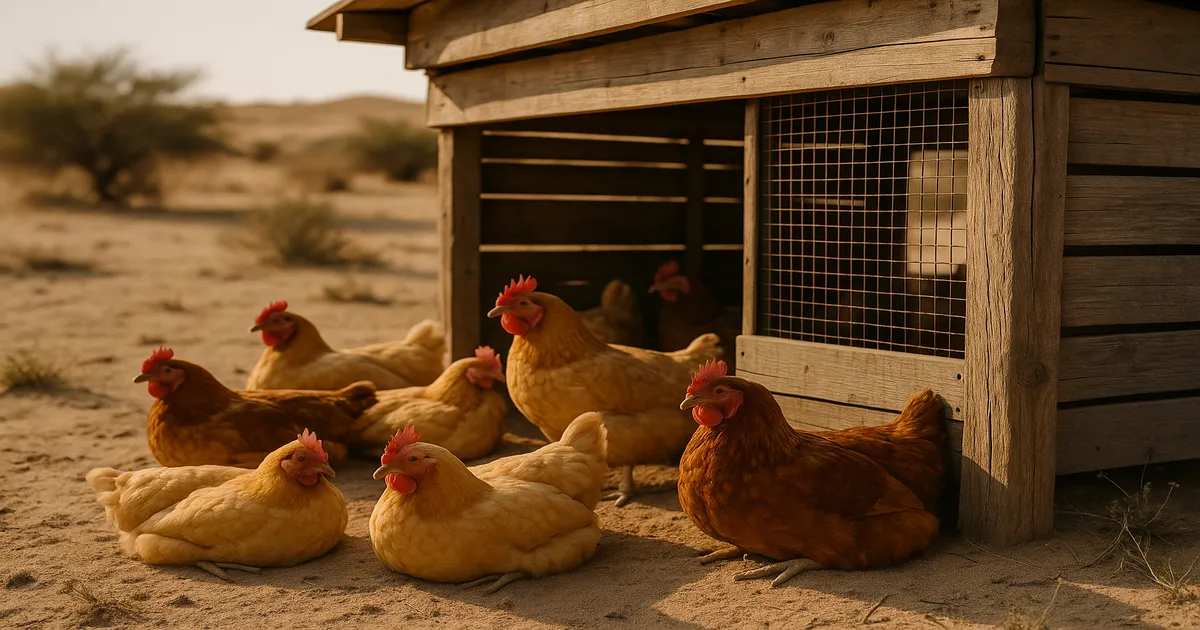
Quick Answer: Raising chickens in a crimson desert climate — the red-soil, arid high-desert regions of the American Southwest like Utah, Arizona, Nevada, and New Mexico — means managing extreme heat, intense UV exposure, and temperature swings of 40–50°F between day and night. Choose Mediterranean or heat-adapted breeds like Leghorns or Egyptian Fayoumis, prioritize ventilation above everything else in your coop design, and treat water and shade as non-negotiable daily priorities.
What Does “Crimson Desert” Mean for Chicken Keepers?
If you’ve searched how to raise chickens in a crimson desert climate, you’re dealing with one of the most demanding environments you can ask a chicken to live in. This isn’t a breed name or a program — it’s the sun-baked, red-earthed landscape of the American Southwest, and it plays by its own rules.
Summers regularly hit 100–115°F (38–46°C). UV radiation is relentless. Then, just when you think the worst is over, temperatures can plummet 40–50°F overnight. Your chickens face all three stressors at once, which is why standard chicken-keeping advice often falls short here.
The good news: with the right breeds, smart coop design, and consistent attention to water and shade, you can run a productive, healthy flock in the desert. Here’s exactly how.
Best Chicken Breeds for a Crimson Desert Climate
What Makes a Breed Desert-Ready?
Not every chicken handles heat the same way. Breeds that thrive in desert conditions share a few key traits: large single combs that dissipate body heat, lean body mass that generates less metabolic warmth, Mediterranean or tropical heritage, and lighter plumage that reflects rather than absorbs solar radiation. Heavy, fluffy breeds are the opposite of what you want.
Leghorn: The Top Overall Desert Performer
The White Leghorn is arguably the best all-around desert chicken. Originating in the hot, dry Tuscan countryside of Italy, Leghorns were built for exactly this kind of climate. Their large single comb works like a heat fin, their white plumage reflects sunlight, and their lean 4–5 lb frame generates minimal body heat.
They’re active, independent birds — not lap chickens — but exceptional foragers that make good use of a large run. Expect 250–320 white eggs per year, even in challenging conditions.
Egyptian Fayoumi: Built for Extreme Heat
If the Leghorn is the best overall desert performer, the Egyptian Fayoumi is the specialist for truly brutal heat. This ancient breed from the Nile Valley has been surviving 110°F+ conditions for thousands of years. They’re small (3.5–4.5 lbs), quick, and wild in temperament — think “miniature jungle fowl” rather than backyard pet.
Fayoumis also carry notable resistance to Marek’s disease and some respiratory illnesses, which matters in dusty desert environments. Production is modest at around 150–180 white or tinted eggs per year, but they’ll keep laying when other breeds have given up entirely.
Andalusian and Minorca: Mediterranean Heat Specialists
Both breeds come from the hot, arid Iberian Peninsula and carry centuries of adaptation to conditions that mirror the desert Southwest. Andalusians are active, blue-laced birds weighing 5–7 lbs with excellent heat tolerance and a production rate of roughly 160–200 white eggs per year. Minorcas are the standout for comb size — they have the largest single comb and wattles of any standard breed, which is a significant thermoregulatory advantage. That oversized comb isn’t a quirk; it’s a radiator. Both breeds lay large white eggs and are well worth seeking out for serious desert keepers.
Buckeye and Rhode Island Red: Popular Choices With Caveats
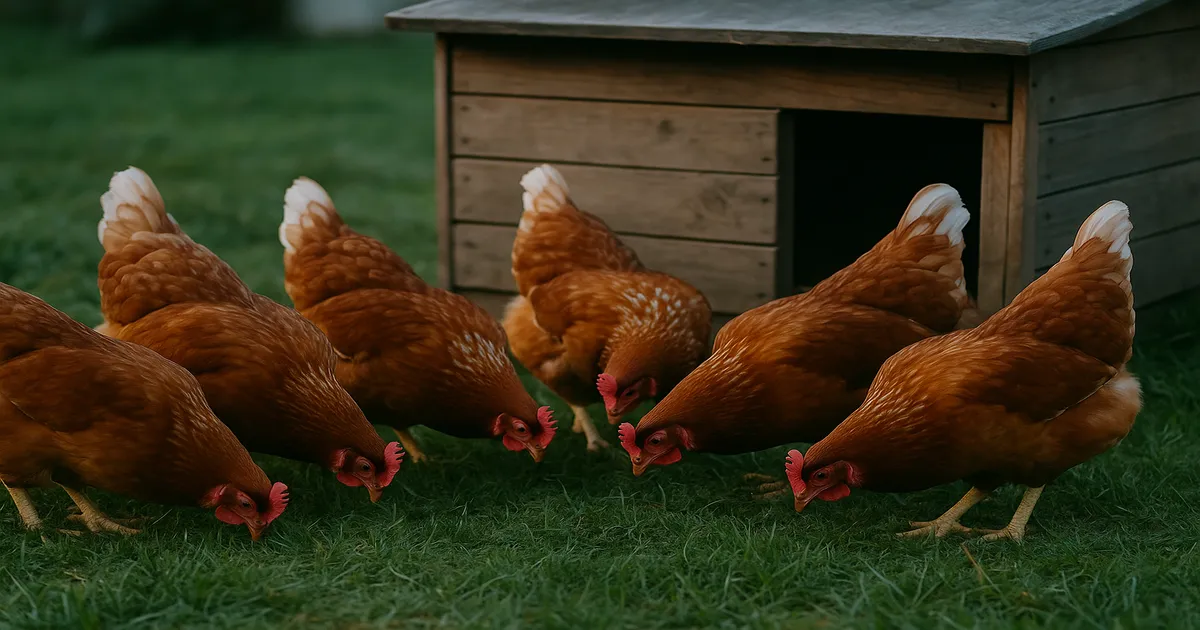
The Buckeye deserves a mention for both practical and aesthetic reasons. Its deep mahogany-crimson plumage is a natural fit for the crimson desert landscape, and it handles heat reasonably well — better than most American dual-purpose breeds. The pea comb is slightly less efficient at heat dissipation than a single comb, so reliable shade access is critical. Expect 150–200 brown eggs per year.
Rhode Island Reds are widely available and genuinely practical for desert beginners who manage husbandry carefully. Their dark plumage absorbs heat, so they need consistent shade and water, but they’re tough birds that produce 200–280 brown eggs per year and handle temperature swings better than most heavy breeds.
Breeds to Avoid in Extreme Desert Heat
Skip these if your summers regularly exceed 100°F:
- Jersey Giant — 11–13 lbs of metabolic heat generation
- Cochin — dense feathering traps heat dangerously
- Brahma — feathered feet collect desert dust; heavy body mass
- Silkie — poor thermoregulation, tiny comb, feathered feet
Quick Breed Comparison
| Breed | Eggs/Year | Egg Color | Heat Tolerance | Laying Onset |
|---|---|---|---|---|
| Leghorn | 250–320 | White | Exceptional | 16–18 weeks |
| Egyptian Fayoumi | 150–180 | White/Tinted | Superior | 14–16 weeks |
| Andalusian | 160–200 | White | Very High | 18–20 weeks |
| Minorca | 180–220 | White | Exceptional | 20–22 weeks |
| Buckeye | 150–200 | Brown | Moderate-Good | 18–22 weeks |
| Rhode Island Red | 200–280 | Brown | Moderate | 18–20 weeks |
Egg Production in a Crimson Desert Climate: What to Expect
How Heat Stress Reduces Laying
When sustained temperatures exceed 90°F (32°C), egg production typically drops 20–50%. Push past 100°F for multiple consecutive days, and even your best heat-adapted hens may stop laying entirely. Shell quality suffers too — heat disrupts calcium metabolism, producing thinner shells, smaller eggs, and more double-yolkers. Hens start diverting energy from reproduction to thermoregulation well before they’re in danger. That’s biology keeping your bird alive, not a management failure.
Seasonal Laying Patterns in Arid Climates
Desert chicken keeping has a predictable rhythm once you know it:
- Spring (March–May): Peak production. Ideal temperatures and increasing daylight mean maximum egg counts.
- Summer (June–September): Expect 30–60% of spring production even with good management. Mediterranean breeds hold up best.
- Fall (October–November): Many hens molt in September–October, halting laying for 6–12 weeks. Support them with high-protein feed during this period.
- Winter (December–February): High-desert nights can drop to 20–35°F. Production is limited by short days; supplemental lighting (14+ hours total daily light) can maintain 60–80% of peak production.
For best results, hatch chicks in February or March. Pullets raised in early spring reach laying age (16–22 weeks depending on breed) before the following summer’s peak heat, giving them time to establish as layers first.
Desert-Optimized Coop Design
Space Requirements for Desert Flocks
Standard recommendations are 4 sq ft per bird indoors and 10 sq ft per bird in the run. In the desert, those minimums aren’t enough. Aim for 6–8 sq ft per bird indoors and 15–20 sq ft per bird in the run. During peak heat, birds spend more time inside during midday, and crowding worsens heat stress and disease transmission significantly. A flock of six birds needs at least 36–48 sq ft of coop floor space and 90–120 sq ft of run.
Ventilation: The Single Most Important Feature
In a desert climate, ventilation beats insulation every time. Aim for 1 sq ft of ventilation per 5 sq ft of floor space — roughly double the standard recommendation. Install adjustable vents high on all four walls, since hot air rises and needs an exit route. Cross-ventilation (vents on opposite walls) creates the airflow that keeps your flock alive on a 110°F afternoon.
A cupola or ridge vent lets the hottest air — which pools at the ceiling — escape continuously. Cover all vents with 1/2-inch hardware cloth to keep predators out without blocking airflow. A sealed metal roof with no ventilation can turn your coop into a 130°F oven. Don’t let that happen.
Siting, Shade, and Roofing
Orient your coop with its longest wall running north-south to minimize surface area exposed to direct east and west sun. Siting under mature trees or in the shadow of a building can reduce ambient temperature by 10–15°F — free cooling you can’t afford to ignore. Elevate the coop 12–18 inches off the ground to allow air circulation underneath and reduce heat transfer from baked earth.
Use reflective or white metal roofing, which can reduce roof surface temperature by 50–70°F compared to dark materials. Insulate the ceiling with R-13 to R-19 insulation to prevent radiant heat from baking the interior, and paint the exterior white or light gray to reduce solar heat gain.
Roosts, Nesting Boxes, and Cooling Systems
Use a 2x4 laid flat as your roost bar — chickens rest more comfortably on a flat surface than a round dowel, and it reduces the risk of frostbite on cold desert nights. Allow 12 inches of roost space per bird. Offer a lower roost option (about 12 inches off the ground) for summer nights when birds prefer cooler air near the floor.
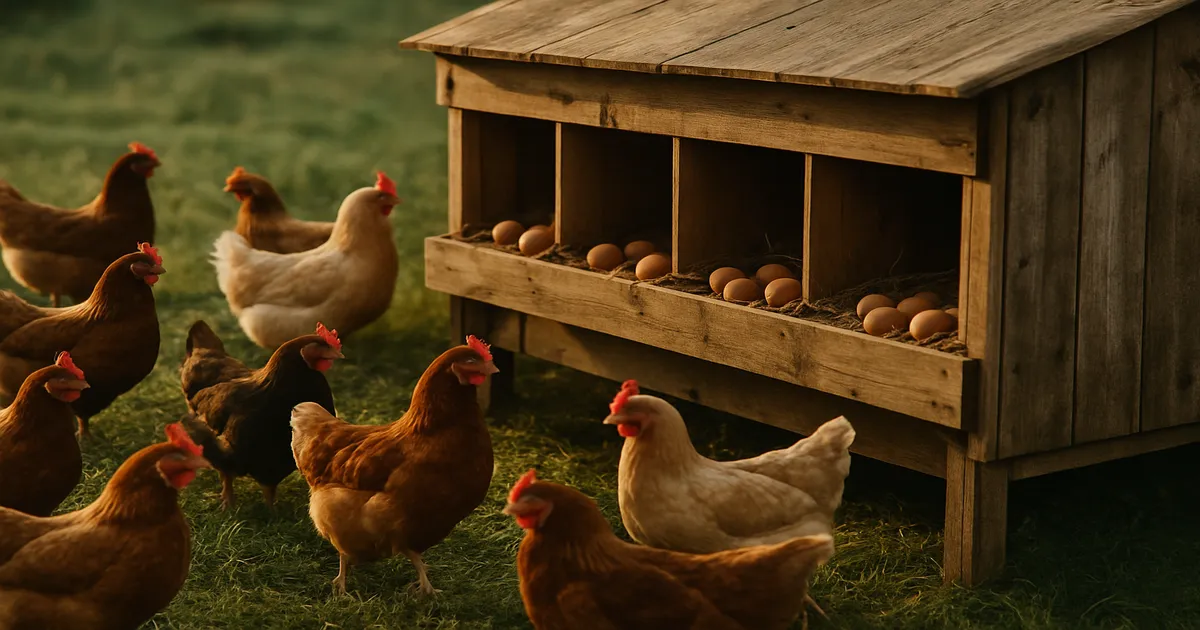
Plan on one nesting box per 3–4 hens (minimum 12x12x12 inches), placed out of direct sun. Sand makes excellent nesting material in desert climates: it stays dry, resists mold, and is easy to refresh.
For active cooling, evaporative misters are highly effective in the low-humidity desert air and can drop ambient temperature by 10–20°F. (Cool-Off Misting Kit) String 70–90% shade cloth over the run to reduce ground surface temperature by 20–30°F. Run box fans during peak heat hours (10 AM–6 PM) to push air through the coop. Frozen water bottles or large ice blocks in the run give birds a cool surface to stand near, and wetting a patch of sand creates a natural cooling pad birds will use instinctively.
Feeding Desert Chickens
Feed by Life Stage
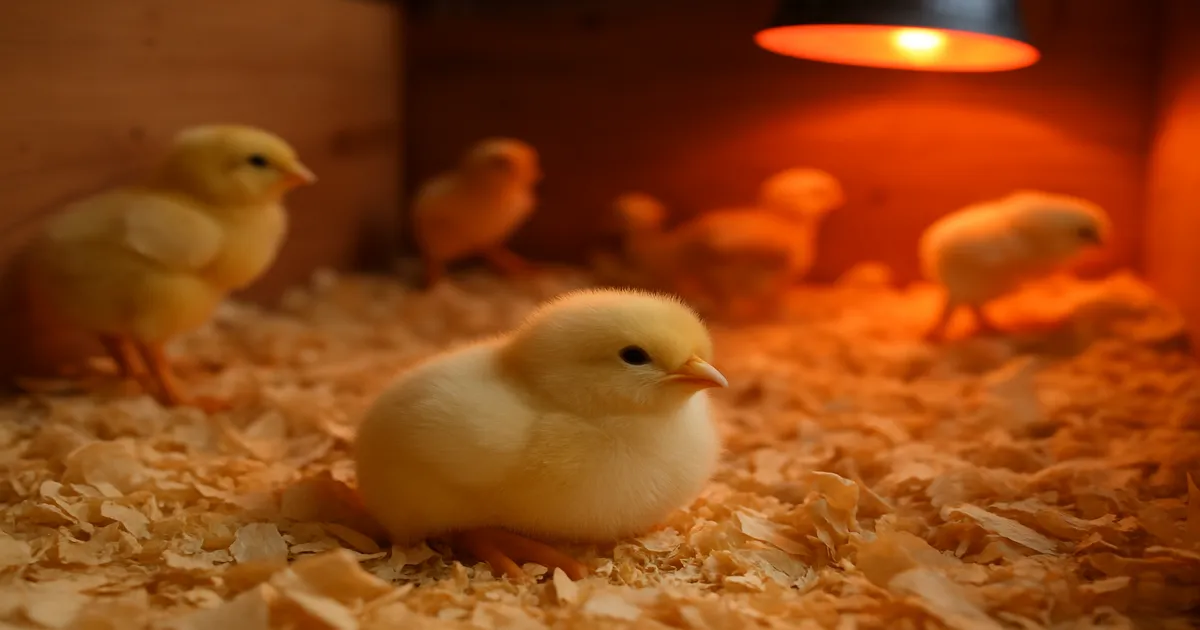
- Chick starter (hatch to 8 weeks): 18–20% crude protein, crumble form, free-choice access.
- Grower feed (8–16 weeks): 16–18% protein, low calcium (under 1%). Pullet kidneys can’t handle high calcium before laying age begins.
- Layer feed (16+ weeks, when laying begins): 15–18% protein, 3.5–4.5% calcium. Baseline consumption is roughly 1/4 lb (4 oz) per bird per day.
In dusty desert conditions, choose pellet form over mash or crumble for layer feed. Pellets produce less airborne dust and less waste.
Managing Reduced Appetite in Heat
Chickens reduce feed intake by roughly 5% for every 1.8°F (1°C) above 68°F (20°C). At 100°F, a hen may eat 30–40% less than normal — which means 30–40% less protein and calcium at exactly the time her body needs it most. Offer feed during the cooler morning and evening hours when birds are more willing to eat. Save scratch grains and mealworms for evening so the heat of digestion doesn’t peak during the hottest part of the day.
During heat waves, add poultry electrolytes to the water to replace minerals lost through panting. (Sav-A-Chick Electrolyte and Vitamin Supplement) Always offer oyster shell free-choice in a separate container so hens can self-regulate calcium intake — shell quality often declines in summer, and free-choice calcium gives them the best chance of maintaining good shells even when feed intake is reduced.
Water Management: The Desert Keeper’s Top Priority
How Much Water Desert Chickens Need
In extreme heat, chickens can drink 2–4 times their normal water intake. A hen that drinks half a cup per day at 70°F may need a full cup or more at 100°F. Running out of water — even for a few hours — can be fatal in a desert summer. Provide multiple waterers in shaded locations and check them several times daily during heat waves.
Hot water discourages drinking, and birds that won’t drink are birds on their way to heat stroke. Keep waterers in full shade and consider nipple-style waterers, which stay cleaner and cooler longer than open dishes because the water isn’t exposed to direct sun or airborne debris. Freeze water in large containers overnight and add ice in the morning to extend the time water stays cool.
Desert heat also accelerates algae and bacterial growth in open waterers. Use dark-colored containers to limit light penetration, scrub waterers every 2–3 days, and add apple cider vinegar (1 tablespoon per gallon) to inhibit bacterial growth. Do not use ACV with metal waterers — it corrodes the metal.
Signs of Heat Stroke: Act Fast
Know these warning signs:
- Panting with open beak and outstretched neck
- Wings held away from the body to release heat
- Lethargy or unsteadiness — standing still, eyes half-closed
- Pale or discolored comb and wattles
If you see these signs, act immediately. Move the bird to a cool, shaded area. Dip her feet and legs in cool (not ice cold) water and offer cool water to drink. A bird in full heat stroke can die within minutes.
Predator-Proofing Your Desert Flock
Know Your Desert Predators
The desert has a serious and unique predator lineup:
- Coyotes — the primary threat; persistent, intelligent, and active day and night
- Rattlesnakes — can enter coops through small gaps; a real threat to chicks and eggs
- Gila monsters — slow but will take eggs and young chicks
- Roadrunners — surprisingly effective chick predators
- Red-tailed and Cooper’s hawks — daytime aerial threats
- Great horned owls — the dominant nighttime aerial predator
Hardware Cloth, Buried Aprons, and Run Covers
Use 1/2-inch hardware cloth on every opening, vent, and run wall — not chicken wire. Coyotes and raccoons can tear through standard chicken wire. Hardware cloth is heavier and more expensive, and worth every penny.
Bury hardware cloth 12 inches deep along the run perimeter and bend it outward 12 inches at the bottom in an L-shape. A predator digging at the base hits the buried cloth, tries to dig further out, and hits it again. Most give up. Cover open runs with overhead netting or hardware cloth to protect against hawks and owls during the day.
Automatic Coop Doors and Nighttime Security
An automatic coop door is one of the best investments a desert chicken keeper can make. It closes at dusk — when coyotes and owls become most active — even if you’re not home to do it manually. Pair it with a reliable latch on the main coop door (raccoons can work open simple hook-and-eye latches) and you’ve covered the two most common points of nighttime entry.
Frequently Asked Questions: How to Raise Chickens in a Crimson Desert
Q: Can chickens survive 115°F desert heat? Yes, but only with active management. Shade, constant access to cool water, good coop ventilation, and heat-adapted breeds like Leghorns or Egyptian Fayoumis are all essential. Without these, heat stroke can kill a bird in hours.
Q: Do I need to heat my coop in winter? In most high-desert locations, no. Healthy adult chickens tolerate temperatures well below freezing as long as the coop is dry and draft-free. Adding supplemental lighting (14+ hours per day) does more for winter production than adding heat.
Q: How do I keep water from getting too hot in summer? Use nipple-style waterers in full shade, add ice in the morning, and check water temperature multiple times daily during heat waves. Insulating the outside of a waterer with foam pipe wrap can also help slow heat gain.
Q: What should I feed chickens during a heat wave? Offer feed during cooler morning and evening hours. Add poultry electrolytes to the water. Keep oyster shell available free-choice. Avoid scratch grains during the hottest part of the day — the heat of digestion raises body temperature.
Q: How do I protect chicks from rattlesnakes? Use 1/4-inch hardware cloth (not 1/2-inch) on the bottom 12–18 inches of any brooder or chick enclosure. Inspect the coop perimeter regularly for gaps larger than 1/4 inch. Keep the area around the coop clear of debris, wood piles, and tall grass where snakes shelter.