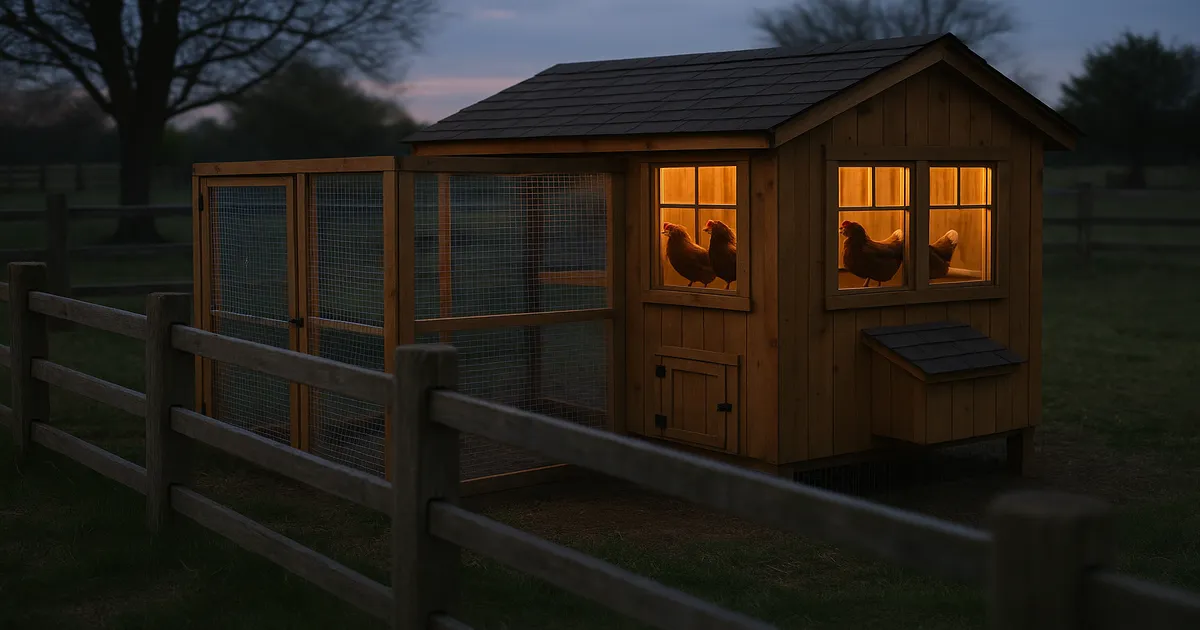
Quick Answer: To prevent raccoons from killing your chickens, secure your coop with 16-gauge hardware cloth (½-inch mesh), install two-step latches on every door, bury a wire apron around the run perimeter, fully roof the run, and remove all feed by dusk. Raccoons are intelligent, dexterous, and persistent — half-measures don’t work.
Raccoons kill more backyard chickens than almost any other predator in North America. If you’re searching for how to prevent raccoons from killing your chickens, you’ve likely already had a scare — or worse. The good news is that a well-built, well-managed setup can stop them almost completely. The bad news is that there’s no single trick. Raccoon-proofing requires layering multiple defenses, and skipping even one creates a gap they will eventually find.
Understanding Raccoon Behavior and Attack Patterns
When and How Raccoons Attack
Raccoons are active from dusk to dawn, year-round, across virtually all of North America. They don’t hibernate. Winter attacks are less common because raccoons slow down in extreme cold — but they’re still possible. Pressure peaks from late spring through fall, when juveniles disperse and competition for food increases.
Understanding how raccoons get in is the first step to keeping them out. Here are their most common entry methods, roughly in order of frequency:
- Reaching through inadequate wire (chicken wire or large-mesh hardware cloth)
- Opening unlatched or single-latch doors
- Digging under the run perimeter
- Climbing over uncovered runs
- Exploiting ventilation gaps
Reach-Through Attacks: The Hidden Threat
This is the one that shocks new chicken keepers most. A raccoon doesn’t need to get inside your coop to kill your birds. They’ll reach through standard chicken wire, grab a hen, and pull her apart piece by piece. It’s gruesome, and it’s common. Mesh size matters just as much as the lock on your door.
How to Tell a Raccoon Kill from Other Predators
Before you spend money hardening your setup, confirm raccoons are actually the culprit:
- Raccoon: Birds found partially eaten or pulled through wire; missing heads or limbs; eggs stolen; hand-like 5-toed tracks around the coop
- Fox: Clean kills, birds carried off entirely, feathers scattered along a trail
- Opossum: Slow and opportunistic; usually takes eggs or weak birds; rarely kills healthy adult hens
- Hawk or owl: Bird found in the open with a clean kill; feathers plucked neatly at the kill site
- Weasel or mink: Multiple birds killed but not eaten; small entry holes; bites to the back of the head
How to Prevent Raccoons from Killing Your Chickens: Coop Construction
This is where the battle is won or lost. Every other deterrent is secondary to a physically secure coop.
Hardware Cloth vs. Chicken Wire: Why It Matters
Standard chicken wire is designed to keep chickens in, not predators out. The hexagonal openings are large enough for a raccoon to reach through, and the thin wire can be torn or bent with enough force. Hardware cloth — a welded wire mesh with square openings — is a completely different product. It’s rigid, difficult to deform, and sized small enough to block raccoon hands when you choose the right spec.
Use these specifications on every surface — walls, floor, roof, and vent covers:
- Mesh opening: ½ inch maximum. Raccoons can reach through 1-inch openings and grab birds.
- Wire gauge: 16-gauge is the preferred standard. 19-gauge is the minimum — anything lighter can be bent or torn over time.
A reliable option is a welded ½-inch hardware cloth roll rated for predator exclusion.
Raccoon-Proof Latches: Two-Step Mechanisms That Work
Raccoons can open slide bolts, hook-and-eye latches, and simple clasps — especially after a few attempts. They have highly dexterous front paws and will manipulate a latch repeatedly until it opens. The solution is a latch that requires two separate hand movements, something raccoons cannot coordinate.
Reliable options include:
- Spring-loaded bolt latches paired with a separate clip or carabiner
- Double-action barrel bolts (slide and lift simultaneously)
- Padlocks for any door that isn’t opened daily
- Locking carabiners as a secondary backup on existing hardware
A heavy-duty barrel bolt paired with a locking carabiner is one of the most cost-effective combinations available.
Burying the Perimeter: Your Two Options
Raccoons dig. If your run sits on bare ground with no buried barrier, it’s only a matter of time. You have two solid options:
- Vertical burial: Extend hardware cloth 12 inches straight down into the ground along the run perimeter
- Horizontal apron (skirt): Lay hardware cloth flat on the ground, extending 12–18 inches outward from the base of the run — no digging required, and grass grows through it within a season
The horizontal apron method is easier to install and equally effective. When a raccoon digs at the base of the run, it hits the wire immediately and gives up.
Covering the Run and Securing Ventilation
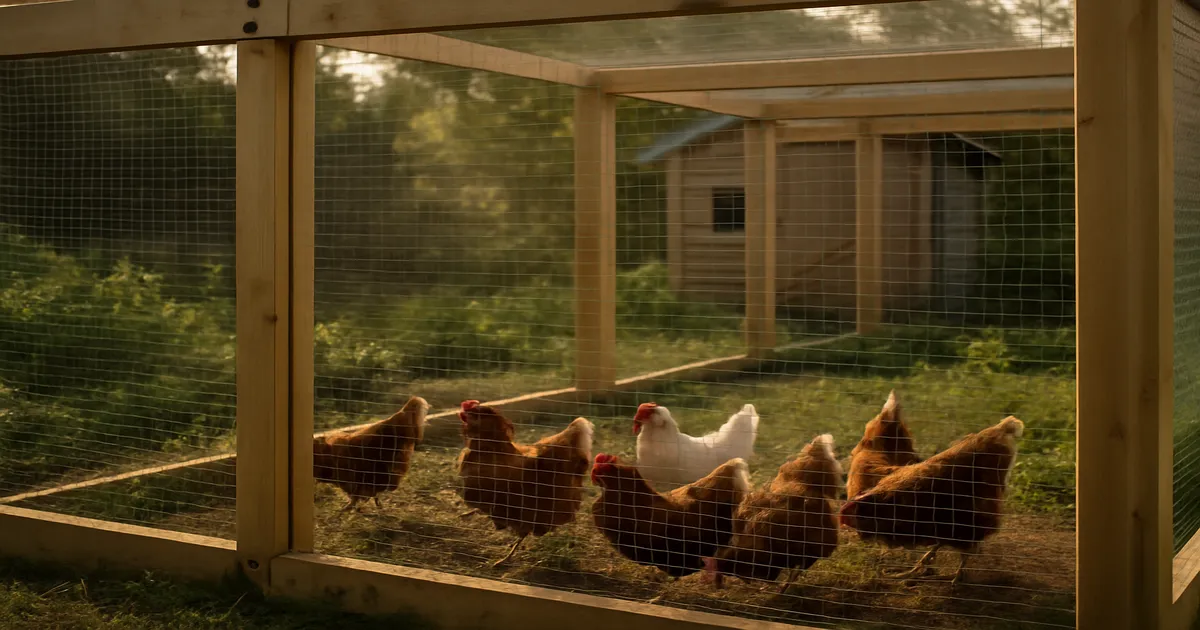
Raccoons climb fences, trees, and coop walls without difficulty. An open-top run is an open invitation. Cover the entire run with hardware cloth or welded wire — either a solid roof or a taut horizontal cover. Chicken wire is acceptable for the roof only if the walls are already fully secured with hardware cloth, since reach-through attacks from above are less common. That said, hardware cloth everywhere is the safer choice.
Every coop also needs ventilation — a minimum of 1 sq ft of vent space per 10 sq ft of floor space is the widely accepted standard. Place vents high on the walls or in the eaves, well above roost height, and cover every opening with ½-inch hardware cloth secured with screws and washers. Staples pull out; screws don’t.
Roost Height as a Survival Factor
If a raccoon does breach your coop, roost height becomes critical. Birds sleeping at 4–6 feet off the ground are much harder to reach than birds on low roosts or the floor. Set roost bars at a minimum of 4 feet, with 6 feet being ideal. Use 1.5–2-inch diameter bars so birds can grip securely. An automatic coop door that closes reliably at dusk adds another layer of protection without relying on you to remember.
Feeding Practices That Reduce Raccoon Attraction
Remove All Feed by Dusk
Food left out overnight is one of the top reasons raccoons target a specific property. Make it a non-negotiable habit: remove or fully secure all feeders and waterers at least one hour before sunset. Raccoons that find nothing to eat move on quickly. Raccoons that find food return every night — and eventually investigate the coop.
Feed types by attractant risk:
- Mash and fermented feed: Never leave these out overnight. Wet feed is highly aromatic and reliably attracts raccoons and rats.
- Scratch and mealworms: High-attractant treats — store in sealed containers inside your home or a locked outbuilding.
- Pellets: The least attractive option. Less aromatic than mash and harder to steal through wire.
Raccoon-Proof Feeders and Feed Storage
If removing feeders daily isn’t practical, a weight-activated treadle feeder is a solid solution. These designs only open when a chicken steps on the platform — raccoons are the wrong shape to trigger them reliably.
For bulk feed storage, keep mealworms, scratch, and high-value treats in sealed metal containers. Raccoons and rodents will chew through bags and soft plastic without much effort. A metal can with a locking lid handles this well.
Breed Selection: A Layer of Passive Defense
Breed choice won’t substitute for a secure coop, but it can make a real difference in how your flock responds to threats.
Higher-Risk Breeds
- Silkies: Cannot fly to safety; fluffy plumage impairs vision and escape response
- Polish: Crested feathers block peripheral vision — they often don’t see a predator coming until it’s too late
- Cochins: Feathered feet reduce agility; calm temperament means they rarely flee
- Buff Orpingtons: Heavy-bodied and docile; slow to react and slow to roost
These are wonderful birds. They simply need a better coop, not just an average one. Buff Orpingtons and Cochins also go broody frequently, which compounds their risk — a broody hen sitting at ground level in a nest box is a stationary target.
More Predator-Aware Breeds
Rhode Island Reds, Leghorns, Easter Eggers, and Australorps all have strong flight responses and tend to roost early and reliably. Leghorns in particular are famously alert — frustrating in some contexts, but genuinely useful when a raccoon is nosing around the perimeter at dusk.
The Role of a Rooster
A rooster won’t stop a raccoon, but he buys time. He’ll sound an alarm at the first sign of a threat and may physically engage a small predator, giving hens a chance to flee. Against an adult raccoon, he’s outmatched — but his alarm call can alert you to investigate. Think of him as a living motion detector, not a security system.
What to Do After a Raccoon Attack
Immediate Steps
Your first priority is finding and closing the entry point before the next dusk. Raccoons return to successful hunting sites — sometimes the very next night. Walk the entire coop perimeter in daylight, looking for bent wire, dug soil, unlatched doors, or gaps near vents. Patch everything with 16-gauge hardware cloth secured with screws and fender washers, not zip ties or staples.
Treating Injured Hens
- Isolate the injured bird immediately in a hospital cage kept at 75–80°F (24–27°C)
- Clean wounds with saline solution or diluted chlorhexidine (0.05% solution)
- Apply a veterinary wound spray — avoid hydrogen peroxide on deep wounds, as it damages tissue (Vetericyn Plus Poultry Care)
- Cover with non-stick bandaging; change the dressing daily
- Add a vitamin and electrolyte supplement to the bird’s water for the first week
- Monitor for signs of infection for 7–10 days
Raccoon bites carry a significant bacterial load. Any deep puncture wound, injury near the eye or skull, or wound that doesn’t improve within 48 hours warrants a veterinary visit. Also watch for foot lacerations from escape attempts — these can develop into bumblefoot (Staphylococcus infection) if left untreated.
Supporting Flock Recovery
Bump protein intake to 20–22% during recovery to support feather regrowth and immune function, and to help hens return to laying faster. Keep the coop routine as consistent as possible — predictability reduces stress. Even a failed attack with no casualties can suppress egg production for 2–6 weeks, so the sooner you stabilize the flock, the better.
Additional Deterrents: Lights, Animals, and Trapping
Motion-activated lights can disrupt raccoon approach patterns and alert you to nighttime activity. They work best as an early-warning layer — raccoons habituate to lights quickly if there’s no physical consequence attached.
Motion-activated sprinklers are more effective because the physical surprise is harder to ignore.
Livestock guardian dogs are the gold standard for free-range flocks. Great Pyrenees, Anatolian Shepherds, and Kangals bond with chickens and will actively patrol overnight. Guinea fowl are exceptional alarm callers — their loud, distinctive calls alert the entire flock (and you) to raccoon presence well before an attack.
Live trapping is legal in many areas but regulated in others. Check your state or provincial wildlife laws before setting a trap — many jurisdictions prohibit relocating raccoons more than a mile or two, and some require a permit. Where lethal control is legally permitted, it’s the most effective long-term solution for a persistent problem animal. Contact your local wildlife agency for guidance on legal methods in your area.
Frequently Asked Questions
What is the best hardware cloth gauge to keep raccoons out of a chicken coop?
Use 16-gauge hardware cloth with ½-inch mesh openings. This combination is rigid enough to resist bending under sustained pressure and has openings too small for a raccoon to reach through. If 16-gauge isn’t available locally, 19-gauge is the minimum acceptable — anything lighter can be deformed by a determined raccoon over time.
Can raccoons open chicken coop latches?
Yes. Raccoons can open slide bolts, hook-and-eye latches, and simple clasps, especially after a few attempts. The solution is a two-step latch that requires two separate hand movements — such as a spring-loaded bolt with a carabiner backup, or a padlock. Single-motion latches are not raccoon-proof.
Will a rooster protect my chickens from raccoons?
A rooster provides limited but real protection. He’ll sound an alarm at the first sign of a threat and may physically engage a small predator, giving hens time to flee. Against an adult raccoon, he’s outmatched. Think of him as an early-warning system, not a substitute for a secure coop.
Do motion-activated lights keep raccoons away?
Motion-activated lights can deter raccoons initially, but raccoons habituate to them quickly — especially if food is nearby. Lights work best as one layer in a broader deterrent strategy. Motion-activated sprinklers tend to be more effective because the physical surprise is harder to ignore over time.
How do I know if raccoons are stealing eggs without killing my birds?
Raccoons will steal eggs nightly without ever harming a bird, and this is frequently misdiagnosed as a laying problem. If your hens appear healthy, are eating well, and show no signs of molt or illness but production has dropped, check for raccoon activity. Look for disturbed nesting material, broken egg fragments in nest boxes, or hand-like tracks around the coop at dawn.