Quick Answer: Salmon Faverolles lay approximately 150–180 eggs per year, or 3–4 eggs per week, in a light pinkish-cream shell that falls into the USDA Large size category. They’re moderate producers — not record-setters — but they’re genuinely cold-hardy layers with a temperament that makes them a joy to keep. Most pullets start laying at 18–20 weeks and remain productive for 3–4 years.
If you’ve been researching how many eggs Salmon Faverolles lay, you’ve probably already fallen a little in love with the breed. That fluffy, teddy-bear appearance and famously gentle personality are hard to resist. But before you add a few to your flock, it’s worth knowing exactly what to expect at the nest box — and how to get the most out of their laying years.
Salmon Faverolles Egg Production: Weekly and Annual Numbers
Average Eggs Per Week and Per Year
Most Salmon Faverolles hens settle into a rhythm of 3–4 eggs per week, which works out to roughly 150–180 eggs per year under normal backyard conditions. Push that with excellent management — optimal nutrition, consistent lighting, low stress — and a young hen in her first year can approach 200 eggs annually.
That’s a respectable number, but go in with clear expectations. This is a heritage breed with a dual-purpose history, not a production machine.
How Salmon Faverolles Compare to Other Breeds
| Breed | Eggs Per Year |
|---|---|
| Leghorn | 280–320 |
| Barred Plymouth Rock | 200–280 |
| Buff Orpington | 175–200 |
| Salmon Faverolles | 150–180 |
Salmon Faverolles sit comfortably in the heritage-breed middle ground — comparable to Buff Orpingtons and ahead of many ornamental breeds. If sheer egg volume is your primary goal, a Leghorn or Production Red will outperform them. But if you want a friendly, cold-hardy layer who also happens to look spectacular in the yard, Faverolles deliver.
How Long Do Salmon Faverolles Lay Productively?
Peak production runs through years one and two. After that, expect a gradual decline of roughly 15–20% per year. Most hens remain useful layers for 3–4 years total, after which production drops enough that many keepers transition older birds out of the laying flock. Plan your flock rotation accordingly.
What Do Salmon Faverolles Eggs Look Like?
Egg Color: The Pinkish-Cream Tint Explained
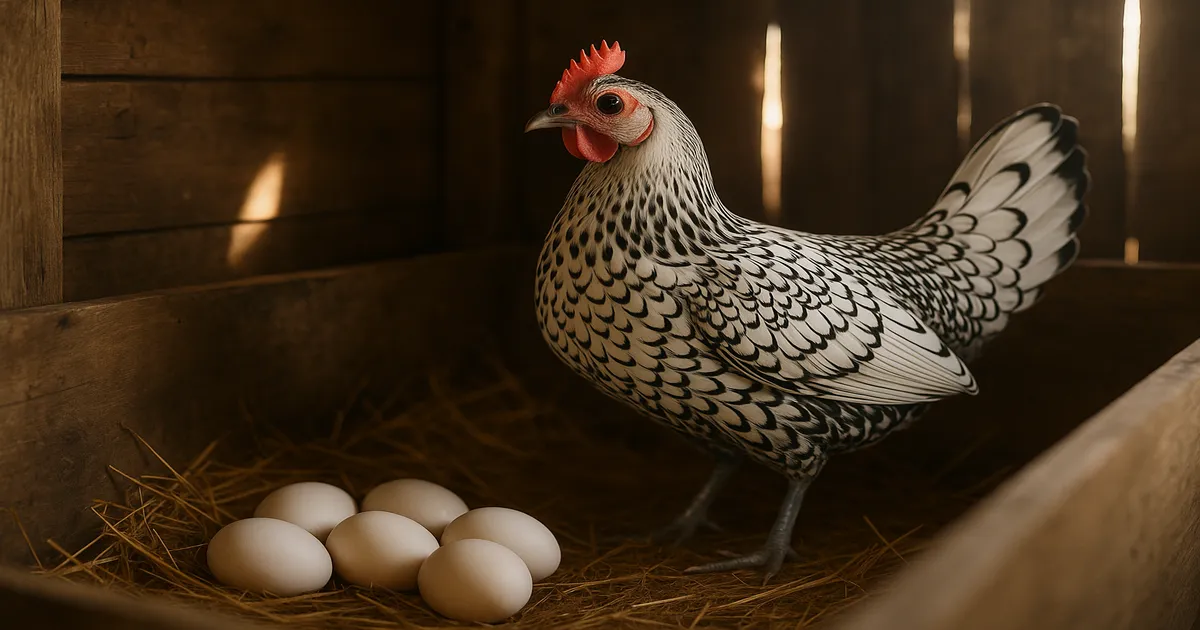
Salmon Faverolles eggs have a distinctive light pinkish-cream to pale tinted shell. It’s subtler than the deep terracotta of a Welsummer egg, and warmer and more interesting than a plain white shell. Think of it as a creamy off-white with just a hint of blush. In a mixed egg basket, they add lovely visual variety — something backyard sellers particularly appreciate.
Egg Size and USDA Weight Classification
Eggs typically land in the USDA Large category, weighing 24–27 oz per dozen. Given the breed’s larger body size — hens run 6.5–8 lbs — this isn’t surprising. Bigger birds tend to lay bigger eggs. The combination of attractive color and solid size makes Salmon Faverolles eggs genuinely appealing, even if the weekly count isn’t quite as high as some other breeds.
When Do Salmon Faverolles Start Laying?
Point of Lay: What Age to Expect First Eggs
Most Salmon Faverolles pullets lay their first egg somewhere between 18 and 20 weeks of age. That’s a touch later than fast-maturing production breeds like Leghorns, which often start at 16–18 weeks, but it’s a perfectly normal timeline for a heritage breed.
You’ll know laying is approaching when you see the classic signs: a reddening, fuller comb and wattles, squatting behavior when you reach down to handle her, and increased interest in the nesting boxes.
Hatchery Stock vs. Show Lines: Why It Matters
Not all Salmon Faverolles are bred the same. Birds from hatchery stock tend to begin laying closer to 18 weeks because hatcheries select for production alongside type. Birds from exhibition or show breeders, however, may not start until 20–24 weeks — show breeding prioritizes conformation, feathering, and color pattern, and early laying isn’t always the focus.
If getting eggs quickly matters to you, ask your breeder upfront whether their birds come from production-oriented or show-oriented lines. It’s a simple question that can save you a month of waiting.
How Many Eggs Do Salmon Faverolles Lay in Winter and Summer?
Winter Laying: A Genuine Breed Strength
Winter laying is one of the breed’s real advantages. Their small single comb resists frostbite better than large-combed breeds, and their dense, heavily feathered body handles cold temperatures with ease. That said, they’re still chickens — shorter days mean fewer eggs.
Without supplemental lighting, expect a 20–30% dip in production during the darkest weeks of November through January in the Northern Hemisphere. That’s not a crisis, just biology. Compared to many other heritage breeds, Faverolles hold up well through winter.
Summer Heat and Egg Production
Heat stress is the other seasonal challenge. When temperatures consistently exceed 85°F (29°C), hens eat less, drink more, and redirect energy away from egg production. Salmon Faverolles’ heavy feathering — a real asset in winter — makes them more susceptible to heat stress than lighter breeds. Shade, good ventilation, and cool fresh water become non-negotiable in summer. A reliable, easy-to-clean waterer helps here. (Harris Farms Plastic Poultry Fount) High-moisture treats like watermelon can also help with hydration on hot days.
Using Supplemental Lighting to Maintain Winter Production
Hens need roughly 14–16 hours of light per day to maintain consistent laying. A simple timer-controlled LED bulb in the coop, set to extend morning light before sunrise, can keep winter production close to summer levels. Add light gradually — about 15 minutes per week — rather than switching abruptly, and aim to bring total daily light up to 15 hours. It’s one of the easiest and most effective management tools available to backyard keepers.
Broodiness in Salmon Faverolles
How Often Do They Go Broody?
Roughly 20–30% of Salmon Faverolles hens will go broody at least once per season, with spring being the most common trigger. When they do, they’re genuinely committed — attentive, gentle mothers who take the job seriously. If you want to hatch chicks, a broody Faverolles hen is a wonderful asset. If you want eggs, a broody hen is a temporary problem. A sitting hen isn’t laying, and broodiness can drag on for weeks if left unchecked.
How to Break a Broody Hen
Breaking a broody hen is straightforward but requires consistency:
- Remove her from the nest box every time you find her sitting.
- Move her to a wire-bottomed cage with good airflow underneath — this cools the underside of the hen and disrupts the hormonal state driving broodiness.
- Keep her in the cage for 3–7 days, providing food and water but no nesting material.
- Return her to the flock once she stops displaying broody behavior (fluffing, clucking, trying to return to the nest).
Most hens resume laying within 1–2 weeks of breaking a broody spell.
Feeding Salmon Faverolles for Maximum Egg Production
Layer Feed and Protein Requirements
A quality layer feed with 15–18% crude protein is the foundation of good egg production. Because Salmon Faverolles are larger birds, they eat a bit more than a Leghorn or Easter Egger would — averaging around 4–6 oz (113–170 g) of feed per day. Free-choice feeding, keeping feeders consistently topped up, is the most practical approach for most backyard flocks.
One note specific to the breed: avoid mash-style feed if possible. The wet, sticky texture can mat their beard and muff feathering, leading to discomfort and potential skin issues. Pellets are the cleanest option; crumbles work well too.
Calcium Supplementation
Layer feed contains roughly 3.5–4.5% calcium, which covers most of what a laying hen needs. Even so, always offer oyster shell free-choice in a separate container — hens self-regulate their intake based on what their bodies actually require. Watch for signs of deficiency: thin or soft-shelled eggs, reduced production, and general lethargy. Crushed eggshells are a perfectly acceptable free-choice supplement too. Bake them at 250°F (121°C) for 30 minutes first to eliminate pathogens, and crush them well so hens don’t associate them with their own eggs.
Treats and the 10% Rule
Treats should make up no more than 10% of your hens’ daily diet. Exceed that and you dilute their protein and calcium intake, which shows up quickly in thinner shells and fewer eggs.
Good treat options for laying hens:
- Mealworms — high protein, especially useful during molt
- Leafy greens — kale, spinach, Swiss chard
- Cooked squash or pumpkin
- Watermelon — great for hydration in summer
Keep these away from your flock entirely: avocado (toxic), chocolate, onions in large quantities, raw dried beans, and anything moldy or spoiled. Scratch grains are fine occasionally — a small handful per bird — but they’re not a complete feed and shouldn’t become a daily habit.
Coop Setup to Support Healthy Egg Laying
Space Requirements
Standard coop guidelines call for a minimum of 4 sq ft of indoor space per bird, but Salmon Faverolles benefit from a little more room — aim for 5–6 sq ft per bird inside. Their large, fluffy bodies and feathered feet get muddy and matted in tight quarters, and overcrowding increases stress, feather-pecking, and disease risk. In the outdoor run, provide at least 10 sq ft per bird, though more is always better.
Stress is a direct enemy of egg production. A well-spaced, well-ventilated coop isn’t just about comfort — it’s an investment in your egg supply.
Nesting Box Size and Placement
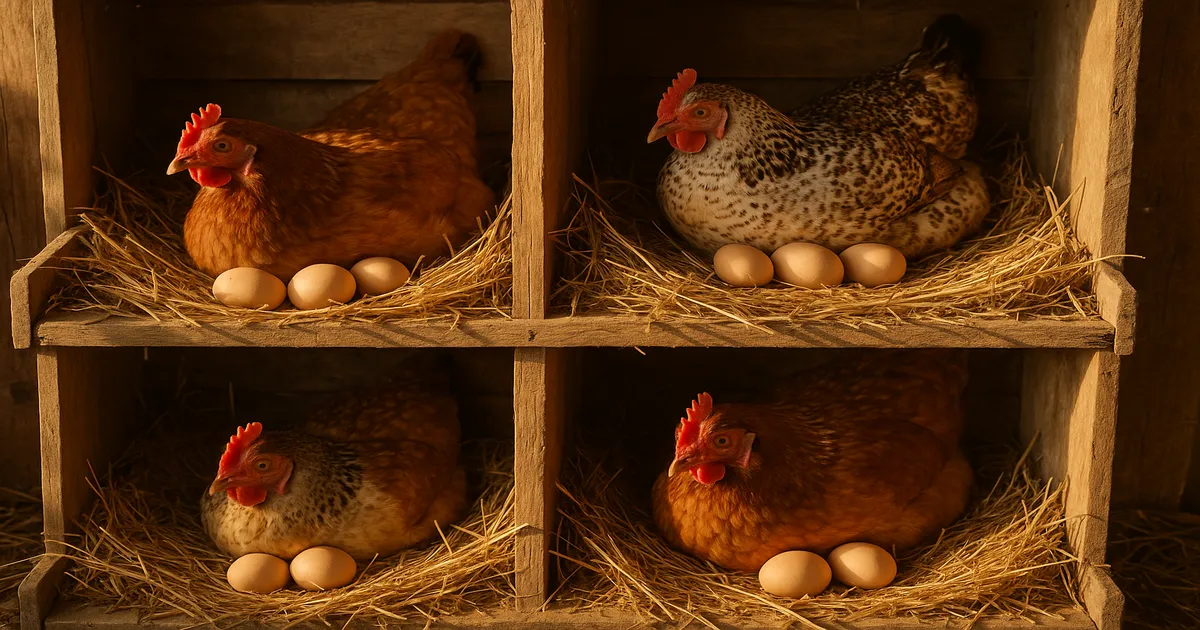
Standard 12×12-inch nesting boxes are on the small side for this breed. Go with 14×14-inch boxes filled with 3–4 inches of straw or pine shavings — deep enough to cushion eggs and help keep feathered feet cleaner. One box per 3–4 hens is the standard ratio.
Position boxes lower than the roost bars (12–18 inches off the floor) to discourage hens from sleeping in them overnight. Curtained or semi-enclosed boxes reduce stress and give hens the privacy they prefer when laying.
Roost Bar Height for Heavy, Feathered-Footed Breeds
This is one area where Salmon Faverolles need special consideration. Their heavy bodies and feathered feet make high roosts genuinely risky — hard landings from height can cause bumblefoot, a painful bacterial foot infection that’s more common in heavy, feather-footed breeds.
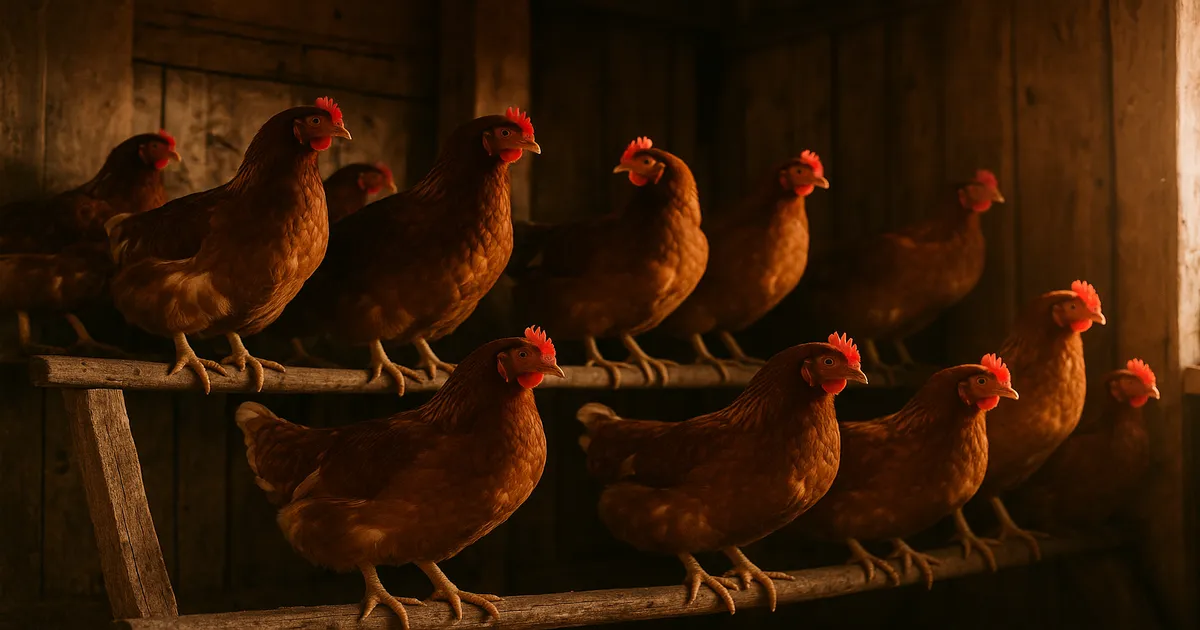
Keep roost bars at 12–18 inches off the ground. Use a flat 2×4 board laid with the wide side up rather than a rounded dowel — feathered feet grip a flat surface far more easily. Allow 10–12 inches of linear roost space per hen so no one gets crowded off the bar at night.
Frequently Asked Questions About Salmon Faverolles Egg Laying
How many eggs per year do Salmon Faverolles lay?
Salmon Faverolles lay approximately 150–180 eggs per year on average, or 3–4 eggs per week. Under optimal conditions — excellent nutrition, consistent lighting, low stress — a young hen in peak production can reach close to 200 eggs annually. Production peaks in years one and two, then declines gradually at around 15–20% per year.
What color eggs do Salmon Faverolles lay?
Salmon Faverolles lay light pinkish-cream to pale tinted eggs. The color is warmer than plain white but subtler than the deep tints of Welsummers or some Easter Egger crosses. They’re a lovely addition to a mixed-breed egg basket.
At what age do Salmon Faverolles start laying?
Most pullets begin laying between 18 and 20 weeks of age. Birds from exhibition or show lines may not start until 20–24 weeks, since show breeding sometimes prioritizes conformation over early production. If a quick start matters to you, ask your supplier whether their stock is hatchery or show-bred.
Do Salmon Faverolles lay eggs in winter?
Yes — winter laying is one of the breed’s genuine strengths. Their small single comb and cold-hardy feathering help them handle cold weather better than many heritage breeds. Expect a 20–30% reduction in production during the shortest winter days without supplemental lighting, but they won’t stop entirely. A timer-controlled coop light extending the day to 15 hours can maintain near-normal production through the coldest months.
Are Salmon Faverolles good egg layers compared to other breeds?
They’re moderate layers — better than many ornamental breeds, roughly on par with Buff Orpingtons, and noticeably below high-production breeds like Leghorns or Barred Plymouth Rocks. Where they shine is the combination of decent production, cold-weather reliability, and an exceptionally calm temperament. For backyard keepers who want a friendly, manageable flock that also delivers a solid supply of eggs, Salmon Faverolles are an excellent choice.